
AIMS Journal, 2025, Vol 37, No 2
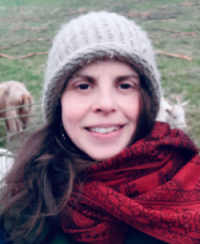
By Naomi Glass
I was born in 1983 into an Ashkenazi Jewish family, whose roots largely came from central and eastern Europe. My mother and her siblings, who were raised in Cardiff, Wales, were diagnosed as children with a rare bleeding disorder called Factor XI (FXI) deficiency, also known as Hemophilia C, where the body doesn't produce enough of the protein factor XI, leading to impaired blood clotting.
FXI deficiency is an extremely rare disorder, but is observed more frequently in Ashkenazi Jews. And it turned out that both my maternal grandparents had been carriers of this disorder, unbeknownst to them, which showed up in their children as painful or heavy periods, disproportionate bruising and excessive bleeding after surgery. Luckily, one of the world's leading experts on FXI, Professor Arthur Bloom, happened to work at Cardiff University Hospital at the time, so the family was skillfully supported in learning how to live well despite this rare disorder, which is estimated to affect about 1 in 1 million people worldwide.
Since its discovery within our family line, the next generations are all tested for FXI and I, too, was diagnosed with this disorder as a child, as were my siblings. Although I had never experienced any symptoms of FXI prior to having children (my menstrual cycle, experience of bruising and bleeding were all in the normal range), I had also never had any minor or major surgery or experienced any major physical trauma to test it. And birth is perceived as a potential trauma when it comes to bleeding and clotting. FXI is said to be a confusing or ‘randomly behaving’ disorder and can be complex to manage from a medical perspective, as it behaves more haphazardly than the other eleven blood clotting disorders (humans have twelve factors needed for healthy clotting). This means, for example, that whatever your FXI levels may show up to be after testing (be them high or low), and even if you have never before experienced a problem with clotting in your life, excessive bleeding may suddenly and randomly show up after physical trauma, minor surgery, or in giving birth, at any point in your life.
So, all the necessary medical precautions have historically been put in place for me at various life junctures, such as having teeth pulled or any other kind of surgery, with the expectation that without it, I might experience a major bleed. This might look like administering preventative clotting medication before any potential physical trauma event. As a child and young person, I secretly felt special having this rare disorder, which meant I carried around a FXI card in my bag, so that medical professionals would know how to treat me in the event of a medical emergency.
But fast forward to 2013, when I became pregnant with my first child; what had felt previously like my FXI badge of honour, suddenly seemed to morph into a chain around my neck. I had simply not realised the impact that FXI would have on my experience of pregnancy and birth. The extremely healthy, robust, outdoorsy and alternative living person that I was, (who had always been somewhat obsessed with what it would be like to experience pregnancy, birth and motherhood), deeply longed for the opportunity to experience an intervention-free physiological birth.
Suddenly being given the medical badge of ‘high risk pregnancy’, my birth preferences were seemingly being dismantled under the advice of medical professionals, before my very eyes, as the risks of a bleed were mitigated one by one. No home birth. No Midwife Led Unit birth. No instrumental delivery birth. Instead, I was foreseeing a high risk, potentially highly monitored labour ward birth, with no soft pain management frills like a birth pool, low lighting etc. And the part that daunted me most of all was that the haematologists felt it would be too risky to administer an epidural if an emergency caesarean birth was required, due to the higher than average risk of an epidural causing a bleed in my spine, resulting in paralysis. Thus, if an emergency caesarean birth became necessary, I would receive a general anaesthetic and would only regain consciousness after the birth, with no memory whatsoever of the moment my first child emerged earthside, maybe not even knowing where my baby was.
However, there was a break in the clouds, with a small but bold ray of sunlight beaming through. For, although this forecast was far from the birth experience of my dreams, it turned out that carrying this rare disorder (that most doctors I was working with had only learnt about at medical school and had never experienced in reality), worked in my favour in the end. This is because, although there were limitations on where and how it was felt I could safely give birth, the fact that I might have a major bleed at any point meant that the usual interventions offered were kept at an absolute minimum, for fear that the intervention itself might increase the chance of me experiencing a major bleed.
In this vein, various forms of induction were seen as too risky to offer to me, as was an instrumental delivery if this were needed. So my ‘high risk’ bleeding disorder safeguarded me from the lived reality of so many giving birth in our culture today, of one medical intervention leading to another, often resulting in a physically (not to mention emotionally) traumatic birth. So when it came down to it, what the medical teams were suggesting to me was that, unless surgery was needed, a natural, physiological birth with no interventions was the safest option for me.
What worked in my favour as well during my first birth, was that my daughter’s positioning was optimal and it turned out that I was one of those lucky first-time birthers, whose birth was pretty textbook in the end, with one stage of labour moving seamlessly onto the next stage, over a fairly short period of time in comparison to many other first births (surges began at 6pm and baby was born the next morning at 2am).
The only time I experienced fear entering the room in this birth was during the pushing stage. The midwives were clearly aware that if I struggled to push this baby out under hospital guidelines (i.e. within about 2 hours for a first birth), that I would be put under a general anaesthetic for a caesarean birth, for which I was terrified. So it was pretty crucial that this final stage went smoothly, if at all possible. With this in mind, my midwife decided that it was best in my case to coach my pushing, telling me strongly to “push as hard as I could into my bum” for the entire 2.5 hours that I was in this second stage of labour. Knowing nothing at this point in my life about pushing and trusting entirely in the midwife, I did birth my daughter totally naturally and physiologically with this coaching. However, I went on to experience an anal prolapse, which I attribute (although can never be certain) to the strain of this pushing stage, where I continuously over-rode my body’s natural urges to expel my baby by pushing above and beyond them. I now live with a significant ongoing weakness in my perineum, like so many others living with birth injuries, often unseen and unspoken about. I am highly aware that so many of us birthing people live with such physical damage after labour, and I am eternally grateful that my first birth experience was such a straightforward physiological one in the end. However, this second stage definitely informed my approach to pushing in my subsequent birth, knowing the life-changing difference a gentle, calm second stage (when there are no perceived additional risks occurring for mother and child) can make to the future health of the birthing person, and with all the women and womb-keepers I have supported as a doula since then.
When I went on to give birth to my second child three years later, I felt more relaxed and informed about what to expect this time, as I had learnt so much from the previous birth. Also, there was a welcome difference this time around. Between pregnancies, we had moved from England to Wales and the Consultant Haematologist I worked with in this pregnancy felt that if an emergency caesarean birth was needed, I could avoid having a general anaesthetic by having a spinal block instead of an epidural, which they felt was lower risk in causing a bleed around the spine. This meant I could enter into birth this time, without the prospect looming of needing to lose consciousness as she entered the world. Which was a huge relief.
Yet, each birth is unique and has lessons to teach us. And this time the pattern of birth did not move quite so seamlessly through its stages, as it had with my first. The surges ebbed and flowed, started and slowed and at some point, after the baby’s heart rate was monitored several times, I was whisked up to the bright lights of the labour ward as the baby’s heart rate was experiencing problematic deceleration. Before I knew it, I was experiencing continuous fetal monitoring, lying prone on a bed and quickly losing the capacity to cope with the intensity of the surges, without being able to manage my pain through movement and positioning. Everything felt like it was descending fast towards an outcome I was afraid of.
My room suddenly was filled with people, talking, machines, loud sounds, harsh lights. My nudity felt obscene, my birth like an interactive theatre show about medical intervention in modern birth, with me at centre stage. And still my partner, Pip, and I were unclear how serious this situation really was, how in danger our baby really was. And the environmental conditions to promote a physiological birth were disappearing, fast….
However, Pip stepped into Birth Superhero mode and worked hard and fast to call back whatever conditions he could find in his knowledge and power to reinstate optimal conditions for a physiological birth, to see if this could restore equilibrium to the baby’s heart rate and to our birth experience. He closed the blinds. He turned down the lights. He politely but strongly asked all unnecessary staff to leave the room and for those that remained to to talk quietly. And miraculously, Pip had learned about wireless continuous fetal monitoring machines, which enable continuous monitoring, whilst allowing the birthing person to remain upright. And the midwives remembered they had one (rarely used), which they pulled out of a cupboard, and did their utmost to get their heads around setting it up with me. And so, albeit wired up, I was mobile again. I could squat and lean into the surges, I could breathe and sound out with more freedom. I could listen more clearly to what my body and baby were asking of me. And before long, the baby's heart-rate returned to normal and within the hour, birth was completed without intervention, our daughter arriving in good health, with her umbilical cord wrapped around her upper arm.
After this experience I could clearly see how the advocacy of my partner had saved the day. But also that holding the space to win back physiological birth conditions on his own had terrified and exhausted him, leaving him unable to really be present emotionally for our daughter’s arrival, when she eventually came. This birth had become a trauma for him, with all that he had held emotionally and practically to support our physiological birth.
In this moment, I realised how important it is to have a team of advocates around the birthing person and that this support is just as much for the birth partner and for the NHS staff, as it is for the person giving birth. In my first birth, I felt like Pip had been the perfect ‘doula’ and so I did not truly understand the need for anyone else but him to be in my team beyond the NHS staff. But now I realise that this is because that birth had been so straightforward.
After my second birth, I could see clearly that extra advocates supporting the birthing couple, such as doulas, can be just as big a support to midwives to enable physiological birth for the people in their care, as they are to the birthing people or couples themselves. That this is the true definition of teamwork when it comes to promoting physiological birth; one member of the birth team supporting another to achieve as empowered a birth as possible, whatever the outcome.
And this is why I went on to train as a doula; which has turned out to be one of my life’s callings.
Author Bio: Naomi lives in Wales. She works as a mother, daughter, partner, friend, homesteader, a Birth Story Medicine™ practitioner and Matrescence Coach. Websites: www.embracingthewaves.com, www.ascribblesnatched.wordpress.com. Email: naomi@embracingthewaves.com
Please feel free to download and share a pdf of this article. If you wish to use AIMS copyright material please see aims.org.uk/general/aims-copyright
If you found this article helpful please consider becoming an AIMS member or making a donation to support our work. We are a small charity that accepts no commercial sponsorship, in order to preserve our reputation for providing impartial, evidence-based information.
AIMS supports all maternity service users to navigate the system as it exists, and campaigns for a system which truly meets the needs of all.