
AIMS Journal, 2026, Vol 38, No 1
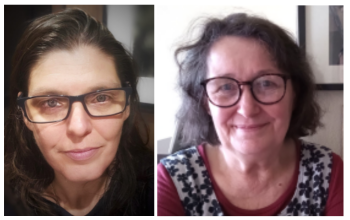
With Rachael Bickley and Alex Smith
I started my conversation with Rachael by asking her to introduce herself.
Rachael: I've been working with women and families for well over 20 years. I worked for 10 years as a maternity support worker, over 10 years as an NCT practitioner in antenatal education, and I've been supporting families to include their voices in the development of maternity and neonatal care through Maternity and Neonatal Voices Partnerships (MNVP) for about 10 years as well.
Alex: Thank you. I know that you have a special interest in medical consent.
Rachael: Yes, over the years, parents have told me about their experiences of consent, both good and bad, and this has led me to explore the issue in much more detail. Through my facilitation of antenatal courses, I support parents in understanding the reality of consent and how to facilitate consent conversations, while through my work with MNVPs and trusts, I help to amplify parent and staff experiences of giving and facilitating consent and develop collaborative programmes that address the issue. It's a lot of work and it continues to shape what I do on a day-to-day basis.
Alex: What exactly is meant by medical consent; can you define it?
Rachael: I can, yes.
The Department of Health writes about valid consent rather than medical consent.1 For consent to be valid there are three requirements. The individual has to have capacity to give consent as defined by the mental capacity act (MCA) and, if they don't have that, it is within the medical licence of a doctor or clinician providing their care to make a decision that is in their best interests and in line with the MCA.2
The next element is that consent needs to be informed. This means that we need to have balanced information that provides a full understanding of what is being offered, what the consequences may or may not be, and the same level of information about any alternatives - including what happens if we do nothing. Programmes exploring how people digest and translate information seem to show that human beings are not very good with big numbers,3 often displaying bias to equivalent amounts based on their presentation (numerosity bias), so evidence-based information has to be presented in a tangible way using absolute risk wherever possible, and in both negative and positive terms.4 So, if we say that one in a hundred women experience a particular problem, we should also be saying that 99 wouldn't. However, providing good research evidence is not always easy because women’s health in the UK is understudied5 and sometimes options and outcomes are not always clear. In the conversations we have with our caregivers, they should be as honest as they can be about the surety of the information they share.
The third element or requirement for consent to be legally valid is that it must be freely given. We must not feel coerced into making a decision. That can be quite difficult when we're talking about very emotive subjects, but it is incredibly important. Unfortunately, parents do report they felt coerced by their midwife or doctor.6, 7 I'm sure that's not usually intentional. I'm sure no one goes into work thinking ‘I'm going to coerce somebody into making a decision today’, but sometimes the underlying tensions lead people to have conversations that perhaps are not as appropriate as they should be. For example, we hear of women being told that the chance of stillbirth doubles if they do not consent to an induction, but not being told doubled from what, or the alternative benefits of a conservative approach.8 Giving consent on that basis is not informed. Being told ‘your baby may die’ without being told that the chance of that is small, feels coercive to women being asked to make a decision. Consent is only legally valid if all three elements are in place.
Alex: The theme for this issue of the journal is antenatal education. We always think
of that as being directed towards parents but you are saying that quite often parents don't
experience a legally valid consent process when they're making their decisions and that health professionals don't get up in the morning thinking they're going to coerce somebody on purpose. Would you say that many midwives and doctors are not fully aware of what consent means? Do they need antenatal education?
Rachael: I think this is really difficult. If you ask clinicians if they know what valid consent is or informed consent then the answer is going to be yes. Nobody believes they're practising in a non-consensual way. But when you explore that a little bit there is sometimes a lack of understanding at quite a basic level. For example, a clinician may believe that informed-consent has been gained because they have had a ‘really good conversation’ with the mother about the benefits of what is being offered - and yet they hadn’t explored the negatives or the other options in an equitable way. The research around women's experiences of consenting to induction, for example, shows that they're frequently told of the benefits but that the possible risks and downsides are not explored in depth. And, yet, clinicians have had the conversation, they have spoken with the mum and she is happy. But some parents are leaving those conversations with questions, or making decisions based on incomplete information, and that can lead to misunderstanding, and ultimately a lack of consent within the legal framework. Really good information is lacking and particularly in acute circumstances when it’s very easy as a human being to become task orientated and to forget to have the type of conversation that supports legally valid consent. So yes, there is absolutely a need for clinicians to receive education about how to do this better. Antenatal education for everybody - in the spirit of co-production, the core of my work - that would be everybody learning together.
The ability of a woman to exercise her autonomy is important for her health and well being.
And yet, how many times as an antenatal practitioner have I heard women and their partners saying “We're not allowed to do this or that”; “We're not allowed to go beyond 40 weeks.” There is a perception that hospital protocols, or rather, that how these are presented by the clinician, are ‘the law’. The media has a very big part to play in our misunderstanding of consent and if the majority of our media is portraying our autonomy as being ‘second to to something’ why would we not believe that? This has to change. From working with women for many years now, their concerns reflect differing advice between clinicians working in the trusts, and there have long been concerns around the time it takes to implement guidelines across healthcare, which results in variable implementation and health care offers and experiences.9,10
Alex: Given women’s experiences of consent in maternity hospitals today, how can we educate and equip them to be able to steer the consent discussions in the way that would make it legally valid - and should we?
Rachael: Very much so. In the sessions that I and may others have facilitated over the years
The acronym BRAIN is used. For anyone who is not familiar with this, it offers a structured set of questions that guides the consent conversation - what are the benefits, risks and alternatives; what does my intuition tell me; and what would happen if we did nothing. I always add an ‘s’ to that, because culturally, there are barriers that prevents people from
asking questions and that ‘s’ reminds people they can, and perhaps gives those who feel they “aren’t allowed”, the permission to “shout out”, raising the questions they need to as necessary. I also support them with strategies, like asking for a five minute break before making a decision, but invariably, in the antenatal class setting, when we talk through scenarios of making decisions using the BRAIN acronym, they still ask, “am I allowed?”. Women ask that question about some really basic things - “Am I allowed to turn the lights down in my birthing room?” “Am I allowed to bring my own blanket?”. So then we have a conversation around consent and I explain the three elements that make it legally valid, and we talk about how partners can support and advocate, but also the limits of that so they can plan for any eventuality.
Alex: This seems like a very important aspect of antenatal education as it protects women from the trauma of non-consensual care. Do we have time for this in today’s shorter antenatal courses? Should we make time?
Rachael: We absolutely should make the time. If we are supporting parents to make decisions that are right for them they need the tools to do that. On a sociological basis it is well documented now that just by being female going to a GP, for example, means that you are less likely to be given medication than a man in the same circumstances; you are less likely to feel heard in those conversations; and you are less likely to be referred.4 Globally you are more likely to die from a heart attack and less likely to receive emergency medicine for it because you're less likely to be diagnosed.11 Just by virtue of being female, we may have lost a little bit of our autonomy because evidence-based information and care is not equitable with that available to men.12 In everyday terms, just by being pregnant, we can lose a little more because the needs of the baby can be sometimes put before the woman’s needs in decision-making conversations. Legally, the baby has no rights before birth,13 but that is not what women are made to feel. People who know me well will know that I often say, ‘the devil is in the implementation’. We have autonomy on a legal basis but that has to be implemented and facilitated before we feel it is true. Any attempt to decline routine elements of ‘care’ can be met with disapproval rather than respect and curiosity. If all is not well with the mum, or more critically it seems, with the baby, the less autonomous we can feel.
Consent isn't always facilitated well, which can then bring into question the validity, but that doesn't mean it's never facilitated well. There are clinicians out there who do facilitate consent brilliantly and I've heard from women who've had the most astounding care where they have been heard and understood and really supported - but some just aren't.
Alex: Apart from abiding by the law - supporting women’s legal and human right to exercise consent and to the autonomy of their body - why does consent matter and what difference does it make?
Rachael: Non-consensual care can leave women in very difficult positions after the birth. Some of the interventions that go along with gynaecology and obstetrics are incredibly invasive and very intimate. If the woman hasn’t given consent freely to these things - knowing that she had options and that saying ‘no’ would be respected - then her postnatal mental health and well-being can be very poor.14
Alex: What positive difference would it make to parents if, through their education with you or with me, they entered the birth arena really able to maximize the chance of being heard, being respected?
Rachael: You can have two parents with identical clinical pathways that you might suspect were really difficult for them both, but when you see them a few weeks after the birth, one is absolutely distraught and the other feels fine about it all and is looking forward to the next baby. There are studies looking at women's well-being connected to decision-making and, regardless of the clinical outcome, supporting women with enough information to make their own decisions for themselves and for their baby, and then respecting those decisions, led to improved postnatal mental health and well-being. However, there is still that underlying sociological principle of ‘as long as my baby's okay, I don't mind what you do”. I've had children and I know I've said it. But, you know, the more I reflect, the more I wonder if I really meant it. I probably did at the time, but if that's what I did mean, what does that mean about me? It means that as an individual I'm entirely unimportant. I am not sure that is what we mean when we say those things. Perhaps it is more along the lines of, “there is a level of sacrifice I am willing as a human being to make for my baby, the baby I have invested so much in, but I would like to be well at the end of this, too”.
Alex: As mothers, we can probably all understand that, in the direst of emergencies, we might agree to anything if we felt it would save our baby - but birth is rarely a dire emergency is it.
Rachael: No, but even in an emergency, there is a conversation that can be had. Simply asking ‘What else could you do?’ makes the mother the decision-maker.
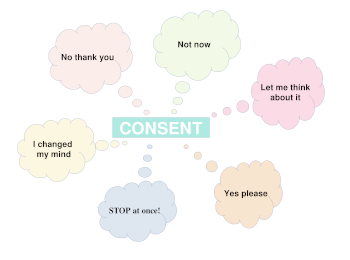
In any situation, very small changes of language make a huge difference. For example, a clinician might say, “Hi, I’m Rachael, I’m just going to take your blood pressure”, or she might say, “Hi, I’m Rachael, may I take your blood pressure?” ‘I'm just going to…” holds no presumption that anyone would decline. It's not even a question, it's a statement and it puts vulnerable people in a very difficult position. When I've had this conversation with clinicians they say, “Oh, but when you're in a hurry…”, and yet the sentence asking permission is two words shorter. The first sentence triggers compliance, the second opens the door for a proper discussion and a space to think before deciding.
This may seem a really innocuous example of care, but any element of care (every test, examination or procedure) requires the mother’s consent and practising on the small things means that women have the skills finely honed to exercise their right to consent when offered a procedure that they may have strong feelings about - such as induction or episiotomy. I often talk to parents about writing B.R.A.I.N.S. down the side of their notebook to help remind them they always have options and that they can steer the conversation. Partners often want to know how they can help. I try to encourage parents to check in with each other all of the time. When some element of care is offered to the mother, her partner can look at her and say, “Are you all right with that?” If she answers “All right with what?”, or if she simply looks hesitant, has she really given her consent - even if she allows the procedure to happen? This opens the door for the mother or her advocate to say “hang on a minute” and then to go through the BRAINS discussion requesting time to consider the discussion before making her decision. It may actually be a clinician who asks that very question, with the same effect. Only then is any consent given, legally valid.
Partners have come back to our reunions and told me that it was very useful to skip right down to, ‘What if we did nothing? Have we got five minutes to make a decision?’ and when they said yes, they used that time to think about any other questions that they had and then were ‘good to go’. They explain that they just needed five minutes to get it right in their heads and that this is what they needed to do, and then they went and did it.
But when parents haven’t felt their consent is facilitated, we hear this at their postnatal sessions. It can be really damaging for the women birthing their babies, and it’s damaging for their partners. I've met partners where consent had not been facilitated well, and they have felt complicit within it, which is awfully damaging. I've held parents in antenatal and postnatal sessions where both parents were sobbing.
I think that clinicians are sometimes afraid that, by opening up the conversation, women will automatically say no. This is very difficult for them if they feel that what they are offering really is the right thing to do, but you know, as antenatal practitioners we were always trained to ‘trust the group’, that they know more than you think. Similarly, if clinicians would trust the parents more, provide good information and give them the space to consider things, women would rarely make bad decisions. Good antenatal education should allow sufficient time to enable parents to explore different eventualities before the birth. Then if a labour situation becomes critical the information is already familiar and they may already have made contingency plans. That means that our antenatal education is not just a ‘nice to have’, it is an absolute critical part of facilitating consent.
Unfortunately, NHS antenatal education isn't well funded, it's not always well provided, and it isn't accessible for lots of the population, especially for people who do not have English as their first language. There must be an awful lot of situations where legally valid consent is not obtained. When people can’t access good information in a language they understand, can they be fully informed and that means they can't be giving consent? Consent is a very basic legal principle, we need to be doing more.
Alex: As this issue of consent is so important, what sort of shape would a good antenatal course need to have in order to be able to give parents sufficient time to absorb these ideas and to truly be able to put them into action?
Rachael: Antenatal education needs to be rooted in rights-based practice and consent. Consent needs to be the heart of any antenatal education course. I would go further to say it needs to be the heart of every single undergraduate training for medical professions, whether they're in obstetrics or not - and that's whether you're a midwife, a doctor, a nurse, whether you're caring for the elderly, whether you're caring for people with learning difficulties, whether you're a health care assistant, a maternity care assistant, a doctor, a consultant, a midwife, nurse, physiotherapist - it does not matter. Every single course we have in health care should be rooted in rights-based care. Not just the theory of informed decisions, but how to facilitate that practically. It's not, you know, but it should be.
Student midwives tell me that they are taught about informed care but never really get shown how to facilitate the conversation until they are placements, where the culture and practice around consent isn’t always as it should be. There are studies highlighting where midwives are actively discouraged from offering women meaningful options.15 This can be very conflicting for midwives old and new.
So in terms of antenatal education, it has to be rights-based. We need enough time to be able to have those conversations, not simply telling women “You have the right to make your own decisions - here is the BRAINS tool”, but having deeper and layered discussions about what that is like in real life and practising different ways of navigating that experience.
So how antenatal education is provided is important, not just the content. A short didactic course with a set curriculum can trigger unhappy memories of school. The compact format makes it hard for people to be more than passive recipients of information - information chosen by the provider, and the sense of it being ‘education’ can put some people off altogether. With a static curriculum, and without sufficient time, discussions around many aspects of birth and parenting may become tokenistic and certainly can’t be revisited each week as the implications of ideas start to dawn. You need time to be able to explore the things that worry people.
An innovative model of maternity care called Pregnancy Circles offers group antenatal and postnatal sessions with midwives and with the same small group of local women whose babies are all due at about the same time. Women see the same two midwives throughout and build relationships with them and with their peers, creating a strong sense of community. ‘Education’ is organically woven into these sessions.16 The approach has been trialled in the UK as part of a study, but sadly is not a standard care option despite international evidence of improved care experiences and outcomes.
You know, people learn by experience and by having conversations and learning the things they need to know, when it is most important to them.17 We really need to make sure we offer a perinatal approach from antenatal through to postnatal sessions. The perinatal course is particularly important today with increasing numbers of women and their partners experiencing perinatal trauma, because, when things haven’t worked out, parents need to be able to talk about their experience within the safety of the group they have come to know and trust. This is especially important when they have experienced their care without well-facilitated consent. Just in my own experience of facilitating antenatal courses, I know there are at least three women who managed to get psychiatric support and help because they came to our postnatal session. They are alive, they are here, and they are caring for their babies because they came to that session and managed to get help - and they hadn't got help elsewhere. We need to have this community approach and offer opportunities in the postnatal period for support.
For me, antenatal education sits hand in hand with well facilitated consent. Given the current experiences of parents and staff, there is a lot of work to do to support everyone to be better informed around how to facilitate it.
I'm really proud of the work that we do, it is transformative.
Author Bio: Rachael Bickley holds a Master of Public Health, is an experienced antenatal educator supporting parent learning across the UK, and works with Maternity and Neonatal Voices Partnerships across the East of England to strengthen co‑production and embed parent voice in maternity services.
1 General Medical Council (2020, updated 2024) Decision making and consent. https://www.gmc-uk.org/professional-standards/the-professional-standards/decision-making-and-consent
2 What is meant by ‘best interests’ is explained on this page. It is worth knowing that partners cannot give (or withhold) consent on behalf of the woman in labour without special arrangements being made beforehand.
3 Bagchi R., Davis D.F. (2016) The role of numerosity in judgments and decision-making. Current Opinion in Psychology. Volume 10, August 2016, Pages 89-93. https://www.sciencedirect.com/science/article/abs/pii/S2352250X15003176?via%3Dihub
4 NICE (2021) Shared decision making. https://www.nice.org.uk/guidance/ng197/chapter/Recommendations
Editor’s note: The commonly used term ‘shared decision making’ reminds everyone that a fully informed discussion should be shared before decision-making, but AIMS reminds the reader that, legally, the final decision is the mother’s and hers alone.
5 Winchester N. (2021) Women’s health outcomes: Is there a gender gap? UK Parliament, House of Lords Library. Women’s health outcomes: Is there a gender gap? - House of Lords Library
6 Parmar A, Lanceley A, Maslowski K, Der Stede EV, Whitten M, Nicholls J. "I didn't feel I could say no": A qualitative study of pregnant women's experiences of consent to vaginal examinations. Eur J Obstet Gynecol Reprod Biol. 2025 Jul;311:114065. doi: 10.1016/j.ejogrb.2025.114065. Epub 2025 May 16. PMID: 40398144. https://pubmed.ncbi.nlm.nih.gov/40398144/
7 Khan Z., Lanceley A., Maslowski K., Hutton L., Nicholls J. (2024) Consent in pregnancy: A qualitative study of the experiences of ethnic minority women. Parent Education and Counseling. Volume 123, June 2024, 108234. https://www.sciencedirect.com/science/article/pii/S0738399124001010
8 Kelly C., Whitten M., Kennedy S., Lanceley A., Nicholls J. (2024) Women’s experiences of consent to induction of labour: A qualitative study. Sexual and Reproductive Healthcare. Volume 39, March 2024, 100928. https://www.sciencedirect.com/science/article/pii/S1877575623001180
9 Lau YZ, Widdows K, Roberts SA, Khizar S, Stephen GL, Rauf S, et al. Assessment of the quality, content and perceived utility of local maternity guidelines in hospitals in England implementing the saving babies’ lives care bundle to reduce stillbirth. BMJ Open Quality. 2020;9:e000756. https://doi.org/10.1136/bmjoq-2019-000756
10 Greenhalgh T. (2017) How to Implement Evidence-Based Healthcare. ISBN: 978-1-119-23852-2. June 2017, Wiley-Blackwell.
11 Al Hamid A, Beckett R, Wilson M, Jalal Z, Cheema E, Al-Jumeily Obe D, Coombs T, Ralebitso-Senior K, Assi S. Gender Bias in Diagnosis, Prevention, and Treatment of Cardiovascular Diseases: A Systematic Review. Cureus. 2024 Feb 15;16(2):e54264. doi: 10.7759/cureus.54264. PMID: 38500942; PMCID: PMC10945154.
12 Merone L, Tsey K, Russell D, Nagle C. Sex Inequalities in Medical Research: A Systematic Scoping Review of the Literature. Women's Health Rep (New Rochelle). 2022 Jan 31;3(1):49-59. doi: 10.1089/whr.2021.0083. Erratum in: Womens Health Rep (New Rochelle). 2022 Mar 16;3(1):344. doi: 10.1089/whr.2021.0083.correx. PMID: 35136877; PMCID: PMC8812498.
13 Birthrights (2021) Human rights in maternity care: the key facts. https://birthrights.org.uk/factsheets/human-rights-in-maternity-care/#:~:text=(There%20are%20very%20rare%2C%20legal,are%20not%20affected%20by%20Brexit
14 Arnold L., Völkelb M., Rosendahl J., Rost M. (2025) A multi-level meta-analysis of the relationship between decision-making during birth and postpartum mental health. HEALTH PSYCHOLOGY AND BEHAVIORAL MEDICINE 2025, VOL. 13, NO. 1, 2456032.
https://doi.org/10.1080/21642850.2025.2456032
15 Ford P, Crowther S, Waller N. Midwives' experience of personal/professional risk when providing continuity of care to women who decline recommendations: A meta-synthesis of qualitative studies. Women Birth. 2023 Mar;36(2):e283-e294. doi: 10.1016/j.wombi.2022.06.014. Epub 2022 Jul 20. PMID: 35869010.
16 A similar model of care was adopted by the Albany Centre (a community midwifery service) with hugely improved outcomes, and yet it was closed down in 2010. The Pregnancy Circle model of care is not (yet) widely used outside of this research study.
17 Knowles, M. S., Holton, E. F., & Swanson, R. A. (2015). The Adult Learner: The Definitive Classic in Adult Education and Human Resource Development (8th ed.). Routledge.
The AIMS Journal spearheads discussions about change and development in the maternity services.
AIMS Journal articles on the website go back to 1960, offering an important historical record of maternity issues over the past 60 years. Please check the date of the article because the situation that it discusses may have changed since it was published. We are also very aware that the language used in many articles may not be the language that AIMS would use today.
To contact the editors, please email: journal@aims.org.uk
We make the AIMS Journal freely available so that as many people as possible can benefit from the articles. If you found this article interesting please consider supporting us by becoming an AIMS member or making a donation. We are a small charity that accepts no commercial sponsorship, in order to preserve our reputation for providing impartial, evidence-based information.
AIMS supports all maternity service users to navigate the system as it exists, and campaigns for a system which truly meets the needs of all.