
AIMS Journal, 2026, Vol 38, No 1
In this article, AIMS volunteer Jo Dagustun draws on her work as a geography student, to offer some thoughts on the concept of antenatal education, where it takes place, and what women learn.
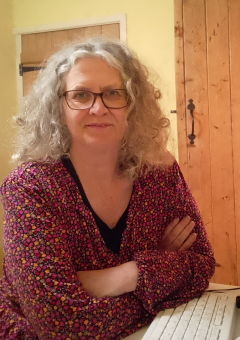
By Jo Dagustun
When I heard that the theme for this AIMS Journal was to be ‘antenatal education’, I knew I had something to say. But first an admission: I have been pregnant and given birth four times, but I’m pretty sure that I’ve not attended any formal antenatal education apart from a one-off Saturday class for women and partners provided by my local hospital in 2004, just before my second birth. I remember three things about that day:
The demonstration of ‘the little clip that might be put on Baby’s head during labour - nothing to worry about’.
The tour of the unit, including seeing how the sole (and rather ugly) room allocated to midwifery-led care (in the days before a local onsite birth centre) was being used as a store room.
That we finished early, in part, as I recall, because the promised hospital canteen was closed; these were the days before on-site commercial coffee shops. But also because we were a small group and we’d apparently covered the content. I can’t now imagine any decent antenatal teacher giving up an extra hour or two in this way!
But I have been thinking a lot about how women come to learn to birth, including whilst preparing a 2017 PhD thesis entitled “Learning to birth, mastering the social practice of birth: conceptualising birthing women as skilful and knowledgeable agents”.
As part of that thesis work, I listened to women recount their experiences of birth and of their interactions with the maternity services over their childbearing career. Reflecting on those interviews, I came to the conclusion that a highly significant space for women’s learning - although one not much talked about - is where they find themselves during their interaction with the maternity services. Since then, I have had a prejudice that such situated and experiential learning is highly significant. Because it is founded on the reality of what women actually do - and can - experience when coming face to face with the maternity system, whatever other plans they might have.
And what exactly do women learn in that space? As I started out on my studies, I was really hoping to understand how women learnt to birth physiologically over the course of successive pregnancies, labours and births. That would be a hopeful thesis. But the weight of the interview data I was collecting necessitated a change in study direction.
That is because two key themes were obvious from the interviews: the prevalence of trouble in the maternity space (and how this is accepted as ‘just the way things are’) and the routine (and non-medically indicated) diversions from an undisturbed physiological birth process. From this, I noticed that rather than representing a space in which women might learn to protect the physiological process of birth, successive experiences of birth seem to represent a space in which many women learn to shut down that possibility. They prioritise defensive action to protect themselves against emotional and physical harm, with some women learning that a physiological approach to birth is unnecessary, abnormal and dangerous.
Whilst I did collect some evidence about how some women learn to birth physiologically over their childbearing careers, by drawing on their experiential knowledge, my main finding was that being skilful and knowledgeable as a birthing woman frequently works in the opposite direction. In this way, I drew a distinction between how women come to master the social practice of birth and how they learn to birth physiologically over their childbearing careers.
The rise in interventions that we now see1 does not surprise me at all. It is proof that this particular antenatal classroom - represented by our experiences - has taught us well the values of an impersonal technocratic factory-line model of maternity care, where trusting relationships between mother and midwife are not valued and where disjointed care is generally all that is on offer. And as we place ourselves within the ambit of the maternity services, it is surely our fundamental task to protect ourselves and our babies from harm as best we can. This is the context within which women learn and make decisions.
All in all rather depressing, perhaps. But this focus provided excellent training for me to become a full-time maternity service improvement activist. And that’s how I ended up as an AIMS volunteer.
Author Bio:
1 BMJ (2025) More than half of births in Great Britain now have medical intervention, report finds
https://www.bmj.com/content/390/bmj.r1923
The AIMS Journal spearheads discussions about change and development in the maternity services..
AIMS Journal articles on the website go back to 1960, offering an important historical record of maternity issues over the past 60 years. Please check the date of the article because the situation that it discusses may have changed since it was published. We are also very aware that the language used in many articles may not be the language that AIMS would use today.
To contact the editors, please email: journal@aims.org.uk
We make the AIMS Journal freely available so that as many people as possible can benefit from the articles. If you found this article interesting please consider supporting us by becoming an AIMS member or making a donation. We are a small charity that accepts no commercial sponsorship, in order to preserve our reputation for providing impartial, evidence-based information.
AIMS supports all maternity service users to navigate the system as it exists, and campaigns for a system which truly meets the needs of all.