
AIMS Journal, 2026, Vol 38, No 3
By Hannah Northern Thakur
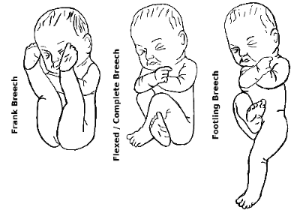
A year ago, my son was born at home, right foot first (you can read the birth story here). Less than 12 hours before he was born, a scan confirmed he was in a complete or flexed breech position. Exactly where his feet were, it didn’t say. Hours later, labour started with a very distinct popping sensation in my cervix and from that point on, I experienced significant cervical pain – very different to my previous cephalic birth. To this day I wonder if he put a foot through my cervix in early labour - his own ‘mechanical induction’.
On paper, some may define this as a ‘footling birth’. At the time, that’s what those in the room called it. And in many guidelines, footling is given as a contraindication for vaginal breech birth – perceived as ‘risky’ and not recommended as ideal for vaginal birth, meaning that my baby and I were ‘lucky’ to have had such positive outcomes.
Since the birth, the topic is one I’ve pondered on a lot and two questions give me pause for thought – and I believe should be considered by anyone with an interest in breech birth:
1) What is the definition of a footling breech, and is it being applied correctly?
2) Given the nuance around foot-first presentation, what does the evidence show - and how well does counselling reflect that?
Before going any further, I want to be clear about what this piece is and isn’t discussing. Where a footling presentation is genuinely present, the evidence for increased risk is real, and I am not intending to weigh in on whether caesarean is the right response to this presentation. That’s a separate question and one I don’t feel I am well placed to answer. What I am asking is how reliably a true footling is identified in practice, and what happens to women whose babies are in fact flexed breech (complete or incomplete breech) not truly footling, but counselled as though they were.
I believe that a lack of clarity in guidance and a lack of research into the subject means that informed consent may often break down on two counts. Both on the definition, and what should follow from it.
Defining a ‘footling’
A brief google of the definition and the current AI overview simply says ‘a footling breech is a fetal position where one or both of a baby’s feet are pointing downward and will deliver before the rest of the body’ (AI overview based on the Cleveland Clinic website - accessed 29/07/26). The overview also references the ‘severe risks’ associated with a vaginal birth in this position.
The RCOG guidance states that footling presentation is an indication to advise women that planned vaginal breech birth carries a higher risk.
However, what is not clear in the guidance is how footling is defined. This was a question raised by Shawn Walker when the current Green Top guidelines were published in 2017. She stated that:
“In my practice, I follow the nomenclature suggested by Susanne Albrechtsen: a footling breech is one in which both feet present first, and the fetal pelvis is disengaged, above the pelvic brim. A fetus whose pelvis is engaged with one or more feet palpable alongside is a flexed breech (complete/incomplete).”
Interestingly, the Welsh national guideline specifies that footling breech means ‘no presenting part in pelvis’. It is a small but telling sign that even among UK guidelines there is no consistently applied definition of what footling actually means.
This important nuance – that a footling diagnosis also requires the fetal pelvis to be disengaged and above the maternal pelvic brim - appears to often be missed. Many articles and websites simply state that footling presentation or a footling birth is one where the foot presents first. This lacks appropriate nuance.
I have heard it stated (although can’t find definitive evidence) that it is not even possible for a full term baby to be diagnosed as a footling since at term there would not typically be space for this. So perhaps a footling definition can only ever be correctly applied to a pre-term baby.
In researching for this article, I spoke with a midwife based in the US who has extensive experience with breech births, who said: It’s a stupid term, why don’t we call it what the real concern is, like a ‘pre-term breech’ or a ‘standing breech’?
Since my own birth experience, I have read that during labour it is not uncommon for a foot, or two, of a flexed breech baby to drop into the birth canal before the bottom. This seems to be what happened in my son’s case. So by this definition it would not be correct to call him a ‘footling’.
Evidence and counselling when feet present first
Challenges arising from this lack of common and evidence-based definition really come to the fore when we consider how to ensure women have truly informed choice about their births. Online communities such as the Facebook groups ‘Breech Birth UK’ and ‘Breech Without Borders’ are full of examples of women who have been diagnosed as having a footling breech baby and therefore counselled that their only option is a caesarean.
What are the risks in the case of a footling? Cord prolapse is one, because the legs and feet don’t fill the pelvis as completely as a baby’s head or bottom, so there is more room for the cord to slip down ahead of the presenting part. Cord prolapse can lead to cord compression - potentially a life threatening emergency. Quoted rates for cord prolapse vary from 15-18% for footling (vs 4-6% for complete breech and 0.5% for frank breech) (https://www.ncbi.nlm.nih.gov/books/NBK448063/) to a wider range of 10-25% for footling (https://emedicine.medscape.com/article/262159-overview). So even the scale of the risks is inconsistently reported, and of course does not consider the definitional nuances this piece is raising. For complete breeches, although cord prolapse is more likely than in frank breeches, a 2020 study concluded that where it did occur, ‘prognosis was good in all cases’. However this finding was specific to complete breeches and may not have considered the implications of dropped feet.
Head entrapment is the other risk most often quoted by obstetricians - a serious risk requiring skilled management should it occur. A 2024 clinical review of this complication, led by Shawn Walker, identified the most severe form as particularly associated with pre-term and growth restricted babies, suggesting that gestational age, rather than foot position is more at play, at least in the most severe cases. It is worth noting that even in the other types of entrapment the research considers ‘manageable’ and ‘preventable’, significant clinical skill is needed in managing the situation - the availability of which may also be a consideration when deciding how to give birth.
More broadly, research into the implications of footling is limited - seemingly because of exclusion from studies. PREMODA, the largest and most influential study, doesn't appear to report any outcomes broken down by footling presentation specifically. And a 2019 study looking at the influence of the fetal leg position on outcomes in vaginally intended deliveries compared only frank vs complete/incomplete presentation - again not including footling or appearing to have considered dropped feet for the flexed breech cohort.
In conclusion, while it is widely accepted by expert clinicians that a true footling breech vaginal birth carries greater risk for the baby, definitive research is limited. The associated ‘paucity of evidence’ is also acknowledged by the RCOG Guidelines. Definitions are not consistently applied, and no major studies appear to consider how the risks could be interpreted for flexed breech babies that are engaged in the maternal pelvis, but that have dropped feet either before or during labour.
If I consider my own experience, had the feet clearly been visible below my son’s bottom in the scan, what counsel would I have been given? And given my suspicion that my son’s foot came through my cervix in early labour, what about intrapartum management of a presenting foot? In my case, I prioritised a physiological birth and did not request any vaginal examinations during the birth. Had I agreed to any, I think it highly likely a foot would have been found on examination. So what might have happened then? Of course we can only speculate at this point, but it is an interesting point to reflect on.
Personally, I am grateful to this day that the presenting foot was not identified before or during labour and that these decisions did not need to be made – although with positive outcomes for both me and my baby, of course that is easy to say in hindsight.
What needs to change?
In short, there is a real lack of evidence and understanding around the term ‘footling breech’. The absence of a clear and common definition means that complete or flexed breech babies are prone to misdiagnosis, and the women expecting these babies are therefore at risk of counsel that may not be truly informed. The end result is that caesareans may be offered without the clarity that both women and clinicians deserve. This may not be an issue if that’s what a woman wants. But for those who would prefer a vaginal birth, it is a pity.
At the very least, I would hope that any future updates to the RCOG guidelines on breech birth add greater clarity around this matter. In particular to ensure clinicians can distinguish between a ‘footling’ and a ‘flexed breech with a dropped foot’ and therefore support truly informed decisions.
Author Bio: Hannah is passionate about physiological birth having had two challenging but empowering and transformative experiences bringing her children into the world. She is committed to supporting women in their choices, changing public perceptions around birth, and campaigning for much needed improvements in maternity services. Hannah is a trained doula and a trustee of AIMS. You can find her at www.hannahnorthernthakur.com
Please feel free to download and share a pdf of this article. If you wish to use AIMS copyright material please see aims.org.uk/general/aims-copyright
If you found this article helpful please consider becoming an AIMS member or making a donation to support our work. We are a small charity that accepts no commercial sponsorship, in order to preserve our reputation for providing impartial, evidence-based information.
AIMS supports all maternity service users to navigate the system as it exists, and campaigns for a system which truly meets the needs of all.