
AIMS Journal, 2025, Vol 37, No 2
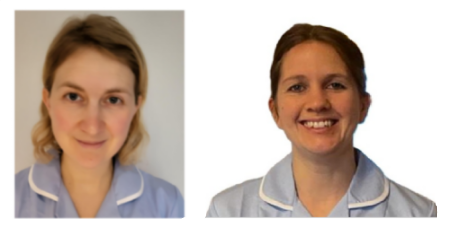
By Lydia Barwood and Anna Jones
Understanding student midwives’ experiences of supporting physiological birth is fundamental for a maternity service that prioritises physiology-informed care.[1] A positive experience of physiological birth offers significant physical and psychological benefits for women,[2] yet undisturbed physiological birth is becoming increasingly rare. The prevalence of physiological birth in the UK is unclear. National reports on maternity statistics tend to focus on intervention rates and rarely capture the number of births that occur without complications or intervention.[3] It is possible to read between the lines of these reports: for example, home births (which are more likely to be physiological) make up just 2.4% of births in England and Wales in 2020.[4] Student midwives based in hospital settings rarely get to see physiological birth. Instead, they see interventions, and the complications that they cause. Student midwives inevitably have fewer opportunities to develop a deep understanding of the birth process, along with the confidence and skills needed to support it. This article explores two (very different) experiences of supporting physiological birth as a student midwife.
I am now approaching the halfway point of my midwifery degree, yet I feel almost none the wiser about physiological birth. So far, I have supported around 20 women through labour and birth but I have yet to witness a birth without continuous cardiotocograph (CTG) monitoring. Nearly half of the women I have cared for had their labour induced and augmented with synthetic oxytocin, and more than half opted for epidural pain relief. This lack of exposure to physiological birth has made it difficult to connect the theoretical knowledge gained from university lectures and skills simulations with what I see in practice. As a result, I feel more confident in aspects of care that are common in the delivery suite, such as managing epidurals, while I have little experience supporting women in upright labouring positions. Likewise, I am reasonably competent in interpreting CTG traces (though the usefulness of this skill is debatable)[5], [6]yet I have never had the opportunity to practice intermittent auscultation of the fetal heart.
Not only have I never witnessed a physiological birth, but I have also observed hospital-based practices that contradict its principles. For example, I have seen spontaneous labour routinely augmented with synthetic oxytocin rather than supported through natural methods such as dimming the lights, ensuring privacy, and creating a calm environment to encourage oxytocin release. Likewise, I have watched women with an epidural push for an hour or more while sitting upright, only to undergo an instrumental delivery, when simply encouraging women to lie on their side increases the likelihood of vaginal birth, possibly by reducing pressure on the coccyx and thus widening the pelvic outlet.[7] Reflecting on this care, I feel that these women were not fully supported in achieving vaginal birth without intervention. Moving forward, these experiences will strengthen my confidence in advocating for women and integrating the principles of physiological birth, even within the constraints of a hospital setting.
I understand that my experience is personal and may not reflect that of all student midwives—some may have had greater exposure to physiological birth than I have. However, my experience is far from unique within my cohort of nearly fifty students, who train across five NHS Trusts. To try to gain some experience of physiological birth, I volunteered to be on-call for home births during my community placement, but unfortunately I was never called out. This year, I have a three-week placement with a home birth team, and I am hopeful that by the end of my second year, I will have had the opportunity to support at least a few physiological births.
Initially I was disappointed that during my first year I wouldn’t set foot on a labour ward and that my intrapartum placement would be in a freestanding midwifery unit (FMU). It is well known that currently, only a very small number of births take place in such a setting.[8] This is despite evidence that FMUs are as safe as obstetric-led units for low-risk pregnancies and result in better outcomes.[9], [10]
I worried that I wouldn’t gain experience of the routine interventions used on the labour ward and this would set me back in my studies. Instead, I saw undisturbed, physiological birth in action and learned just how valuable it is to a woman when her midwife has the confidence and knowledge to simply watch rather than intervene.
To begin with I observed women as they laboured, noting that they would often struggle to respond or focus, they were not entirely present, and their inhibitions seemed to evaporate as they moaned and shouted their way towards transition. I could see their limbic system taking over as they went deeper into their birthing ‘zone’, a state which is often talked about in research exploring women's experiences of birth.[11], [12] My supervisors pointed out the purple line emerging from the sacrum and the accompanying anal dilation and explained that these were signs of labour progress. [13], [14] I learned that through observation we could understand what stage of labour the woman was likely in, reducing the need to carry out vaginal examinations which would disturb the process.
After their births, I witnessed women who were understandably exhausted but also calm, content, happy and innately confident. As Rachel Reed discusses, physiological childbirth can be an empowering event for a woman, promoting confidence in her body and I believe this is what I was seeing.[15] The clearest display of this empowerment was with a woman I was lucky enough to have full continuity of care with. Having attended several of her antenatal appointments, I was familiar with her past birth experience, medical history and what was important to her. I tried to keep this in mind as I cared for her during labour and later, as I carried out her postnatal checks, she told me how reassuring it was to have me as a familiar face at the birth. Watching her journey from a place of fear and anxiety caused by her first medicalised birth, to sharing in her joy and elation at birthing her second child physiologically in the birthing pool, is something I will never forget.
This experience made me realise how inextricably linked continuity of care and physiological birth are. The latest Cochrane review into continuity identified that it allows women to build trust in their midwife and therefore feel safe.[16] We know that if a woman, like any other mammal, feels safe, the hormones needed for physiological birth will flow and enable the process.[17] As I reflect on the relationship I had with this woman, I strongly believe that achieving continuity of care for all women will support physiological birth.
The experiences shared in this article highlight the stark contrast in student midwives’ exposure to physiological birth, depending on their placement settings. Anna’s experience underscores the challenges of learning about physiological birth in intervention-heavy environments, where opportunities to observe undisturbed labour are scarce. In contrast, Lydia’s time in a freestanding midwifery unit provided first hand insight into the power of physiology when birth is supported rather than managed.
These differing perspectives demonstrate the importance of ensuring that student midwives gain experience in a variety of birth settings, including midwifery-led units and home births, to develop the skills and confidence needed to support physiological birth. Without this exposure, the next generation of midwives may struggle to trust in the physiological process and advocate for practices that promote it. This raises a critical concern: today’s student midwives will become the educators of the next generation. If exposure to physiological birth continues to decline, are we at risk of losing the fundamental skills that midwives have safeguarded for centuries?
Author Bios:
Anna is a second-year student midwife and a trained antenatal educator and hypnobirthing instructor. Anna’s previous career was as a scientific researcher. She completed her PhD in 2014 and has held various roles in research and science communication. Anna is passionate about the importance of using research to underpin guidelines and change practice.
Lydia is a second-year student midwife and volunteer breastfeeding counsellor. Lydia is passionate about improving women’s experience of birth and supporting infant feeding.
[1] The term ‘physiological birth’ can hold different meanings for healthcare professionals and the women they support.
Henshall, B, et al. (2024) “What is physiological birth? A scoping review of the perspectives of women and care providers.” Midwifery 2: 103964 https://doi.org/10.1016/j.midw.2024.103964
For the purposes of this article, physiological birth is defined as an undisturbed birth without complications or interventions.
[2] Olza, I et al. (2018), ‘Women’s psychological experiences of physiological childbirth: a meta-synthesis', BMJ Open 8:e020347
https://doi.org/10.1136/bmjopen-2017-020347
[3] NHS Digital (2024) NHS Maternity Statistics, England 2023-2024.
https://digital.nhs.uk/data-and-information/publications/statistical/nhs-maternity-statistics/2023-24/deliveries---2024-hes
[4] Office for National Statistics (2022) Birth characteristics in England and Wales: 2020
www.ons.gov.uk/peoplepopulationandcommunity/birthsdeathsandmarriages/livebirths/bulletins/birthcharacteristicsinenglandandwales/2020?utm_source=chatgpt.com
[5] Alfirevic, Z et al. (2017), ‘Continuous cardiotocography (CTG) as a form of electronic fetal monitoring (EFM) for fetal assessment during labour’, Cochrane Database of Systematic Reviews (2) doi.org/10.1002/14651858.CD006066.pub3
[6] Kirsten Small (2021) Four things every person working in maternity care needs to know about CTGs
https://birthsmalltalk.com/2021/11/24/four-things-every-person-working-in-maternity-care-needs-to-now-about-ctgs
[7] The Epidural and Position Trial Collaborative Group (2017), ‘Upright versus lying down position in second stage of labour in nulliparous women with low dose epidural: BUMPES randomised controlled trial’, BMJ 17(359):j4471 doi.org/10.1136/bmj.j4471
[8] Walsh, D et al. (2020), “Factors Influencing Utilisation of ‘Free-Standing’ and ‘Alongside’ Midwifery Units for Low-Risk Births in England: A Mixed-Methods Study.” Health Services and Delivery Research 8 (12): 1–106. https://doi.org/10.3310/hsdr08120.
[9] Birthplace in England Collaborative Group. 2011. “Perinatal and Maternal Outcomes by Planned Place of Birth for Healthy Women with Low Risk Pregnancies: The Birthplace in England National Prospective Cohort Study.” BMJ 343: d7400–7400. https://doi.org/10.1136/bmj.d7400
[10] NHS London Strategic Clinical Networks (2019) ‘Increasing the number of births at home and in midwifery led units: A best practice toolkit’: www.england.nhs.uk/london/wp-content/uploads/sites/8/2019/11/Increasing-the-number-of-births-at-home-and-in-midwifery-led-units_A-best-practice-toolkit.pdf
[11] Buckley, S. (2018) ‘Gentle Natural Birth for Modern Mamas’: https://sarahbuckley.com/gentle-natural-birth-for-modern-mamas
[12] Dixon, L et al. (2013), “The Emotional and Hormonal Pathways of Labour and Birth: Integrating Mind, Body and Behaviour.” New Zealand College of Midwives Journal 48 (48): 15–23. https://doi.org/10.12784/nzcomjnl48.2013.3.15-23
[13] Yildirim, A et al. (2025), ‘Alternative Approach to Monitoring Labor: Purple Line’, BMC Pregnancy and Childbirth 25 (1). https://doi.org/10.1186/s12884-025-07300-0
[14] Kalis, V et al. (2010), ‘Anal Dilation during Labor’, International Journal of Gynaecology & Obstetrics 109 (2): 136–39. https://doi.org/10.1016/j.ijgo.2009.11.024
[15] Reed, R. (2021) Reclaiming Childbirth as a Rite of Passage : Weaving Ancient Wisdom with Modern Knowledge. Yandina, Queensland: Word Witch Press.
[16] Sandall, J. et al. (2024), “Are Midwife Continuity of Care Models versus Other Models of Care for Childbearing Women Better for Women and Their Babies?” www.cochrane.org/CD004667/PREG_are-midwife-continuity-care-models-versus-other-models-care-childbearing-women-better-women-and
[17] Buckley, S. (2015) ‘Executive Summary of Hormonal Physiology of Childbearing: Evidence and Implications for Women, Babies, and Maternity Care’, The Journal of Perinatal Education 24 (3): 145–53: https://doi.org/10.1891/1058-1243.24.3.145
Please feel free to download and share a pdf of this article. If you wish to use AIMS copyright material please see aims.org.uk/general/aims-copyright
If you found this article helpful please consider becoming an AIMS member or making a donation to support our work. We are a small charity that accepts no commercial sponsorship, in order to preserve our reputation for providing impartial, evidence-based information.
AIMS supports all maternity service users to navigate the system as it exists, and campaigns for a system which truly meets the needs of all.