
AIMS Journal, 2026, Vol 38, No 1
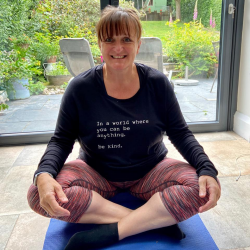
By Rebecca Cumming
As a neurodiverse antenatal teacher, I bring both professional knowledge and lived experience to my practice. This dual perspective allows me to recognise, anticipate, and respond to the unique needs of neurodiverse parents. This is difficult to achieve online and often overlooked.
1. Shared experience and empathy
I understand first-hand the challenges neurodiverse people face in healthcare and education: sensory sensitivities; difficulties processing complex information; anxiety in group settings; and experiences of feeling misunderstood or dismissed. This insight means I can create an environment where neurodiverse parents feel safe, accepted, and understood.
2. Adapting to different learning styles
Being neurodiverse myself, I know that people learn in different ways—some visually, others through listening, reading, or hands-on practice. I design my classes to include multiple teaching modes: demonstrations; props; written resources; discussions; and opportunities to practise skills. This approach helps ensure that no one is excluded, and that complex information becomes more accessible. If this diversity is not entirely lost online, it is certainly much harder to achieve and monitor.
3. Awareness of ADHD and RSD
For parents with ADHD, I understand the importance of keeping sessions engaging, interactive, and broken into manageable chunks. I also recognise how Rejection Sensitivity Dysphoria (RSD) can impact confidence in group learning. By being mindful of language, tone, and body cues, I can create a supportive space that reduces the fear of judgement and builds self-belief.
4. The importance of face-to-face cues
Online classes may be discriminating against people who are neurodiverse as it is much harder for the practitioner to sense and respond to body cues. I know how vital it is to read people’s non-verbal cues—their body language, facial expressions, and energy—in order to respond sensitively. Many neurodiverse people struggle to interpret or feel reassured in online settings. In the room together, I can adjust immediately: slow down, repeat, re-explain, or provide extra reassurance if I notice signs of overwhelm or confusion.
5. Building trust and reducing anxiety
Neurodiverse parents often carry higher levels of anxiety into pregnancy and birth. Because I understand this personally, I make trust and emotional safety a priority. I encourage questions without judgement, normalise different reactions, and acknowledge the strengths neurodiverse parents bring to their journey.
My lived experience as a neurodiverse individual is that neurodiversity is not just an identity but a professional strength. It enables me to deliver antenatal education that is inclusive, empathetic, and flexible. By recognising the diverse ways in which parents learn and experience pregnancy, I ensure that antenatal education is not only informative, but also empowering and accessible for all. When I worked online during Covid that was incredibly difficult to achieve.
To support providers of antenatal education who are perhaps thinking of moving their classes online, I offer the following reminders. This may help you determine whether or not a move online will be equitable for your clients.
Enhanced communication and multiple learning styles
Neurodiverse people often learn in varied ways. Antenatal education typically covers complex, emotional, and practical topics, so using a range of teaching methods is essential.
Visual learners benefit from diagrams, props, and demonstrations of birthing positions or breastfeeding.
Auditory learners absorb information through discussion, explanation, and tone of voice.
Kinaesthetic learners—a common strength for people with ADHD—learn best through hands-on practice (e.g., swaddling a baby, trying breathing techniques).
Reading/writing learners benefit from handouts and written summaries.
In-person teaching naturally integrates these modes, while online sessions are often limited to verbal and visual delivery, missing kinaesthetic and relational elements.1
Reading cues and reducing anxiety linked to RSD
People with ADHD may experience Rejection Sensitivity Dysphoria (RSD), leading to intense fear of criticism or exclusion.
Online platforms often strip away non-verbal cues, making it easy to misinterpret tone and feel rejected.
Face-to-face environments allow participants to read facilitators’ and peers’ expressions, gestures, and reassurance cues, which reduce anxiety and support trust-building.
Reduced sensory and cognitive barriers
Online learning can cause sensory overload (screen brightness, lag, echo) and distraction—difficult for autistic participants and those with ADHD.2
Face-to-face education can be tailored to the group. Dim lighting, quiet rooms, and structured breaks make the environment calmer and more predictable.
Trust, safety, and relationship building
Neurodiverse parents often face higher pregnancy-related anxiety.3
In-person settings create a sense of safety and belonging through empathetic tone, supportive body language, and immediate responses to concerns.
For those with RSD, real-time positive reinforcement reduces fear of rejection and builds confidence.
Practical and embodied learning
Antenatal education covers skills like labour positions, baby handling, and feeding techniques.
These are embodied practices that require demonstration and rehearsal, not just verbal explanation.
People with ADHD, who often thrive on active learning, benefit especially from moving, role-playing, and interacting physically with props.4
Peer support and social connection
Face-to-face groups foster peer learning and shared experience, which reduces isolation.5
Observing peers model behaviours also supports social learning theory—important for those who need concrete, observable examples rather than abstract instruction.
• Limited learning modes: Online sessions usually prioritise auditory/visual learning, leaving kinaesthetic and social learners at a disadvantage.
• Missed cues: Without body language or tone, reassurance is lost—triggering anxiety for those with RSD.
• Attention challenges: ADHD participants may struggle with screen distractions and lack of physical engagement.
• Sensory overload: Prolonged screen use can overwhelm autistic participants and increase fatigue.
• Social isolation: Online sessions remove the relational learning and peer bonding that happen naturally in a shared physical space.
By maximising the use of approaches that work best for neurodiverse people, it is easier to
help them recognise and build on the unique individual strengths and abilities they will bring to their experience of birth and parenting.6
Author Bio: Rebecca Cumming is a mother of three grown sons with more than three decades of experience supporting women and families through pregnancy, birth, and the postnatal period. She has been teaching antenatal classes for 31 years, offering practical, reassuring, and down-to-earth support to expectant and new parents.
Rebecca has ADHD, which she brings openly and positively into her work, valuing creativity, empathy, and a flexible, people-centred approach to learning and support. Alongside her teaching, she has spent many years working as a lay person within maternity services, giving her a deep, grounded understanding of maternity care from both personal and professional perspectives.
1 De Felice S, Hatilova A, Trojan F, Tsui I, Hamilton AFC. Autistic adults benefit from and enjoy learning via social interaction as much as neurotypical adults do. Mol Autism. 2023 Sep 6;14(1):33. https://pmc.ncbi.nlm.nih.gov/articles/PMC10481576/
2 Maya Adiera, Rabiha & Rossli, Noor & Derioh, May. (2024). The Challenges of Online Learning among Autism Students During COVID-19 Pandemic: Teacher’s Perspectives. International Journal of Academic Research in Progressive Education and Development. 13. 10.6007/IJARPED/v13-i4/22845. https://www.researchgate.net/publication/384743594_The_Challenges_of_Online_Learning_among_Autism_Students_During_COVID-19_Pandemic_Teacher's_Perspectives
3 Verity Westgate, Olivia Sewell, Doretta Caramaschi, Heather O’Mahen (2024) Autistic Women’s Experiences of the Perinatal Period: A Systematic Mixed Methods Review. Journal of Autism and Developmental Disorders
https://link.springer.com/article/10.1007/s40489-024-00461-2
4 Department of Health (2017). Better Births: Improving outcomes of maternity services in England. London: NHS England. https://www.england.nhs.uk/publication/better-births-improving-outcomes-of-maternity-services-in-england-a-five-year-forward-view-for-maternity-care/
5 STEWART, Jane & WATTS, Dr & Hughes, Anita & SLADE, Professor & SPIBY, Professor. (2022). The importance of face to face, group antenatal education classes for first time mothers: A qualitative study. Midwifery. 109. 103295. 10.1016/j.midw.2022.103295. https://www.sciencedirect.com/science/article/pii/S026661382200047X
6 Bury, S. M., Hedley, D., Uljarević, M., & Gal, E. (2020). The Autism Advantage at Work: A Critical Review. Autism in Adulthood, 2(1), 1–10. https://pubmed.ncbi.nlm.nih.gov/32810716/
The AIMS Journal spearheads discussions about change and development in the maternity services.
AIMS Journal articles on the website go back to 1960, offering an important historical record of maternity issues over the past 60 years. Please check the date of the article because the situation that it discusses may have changed since it was published. We are also very aware that the language used in many articles may not be the language that AIMS would use today.
To contact the editors, please email: journal@aims.org.uk
We make the AIMS Journal freely available so that as many people as possible can benefit from the articles. If you found this article interesting please consider supporting us by becoming an AIMS member or making a donation. We are a small charity that accepts no commercial sponsorship, in order to preserve our reputation for providing impartial, evidence-based information.
AIMS supports all maternity service users to navigate the system as it exists, and campaigns for a system which truly meets the needs of all.