
AIMS Journal, 2026, Vol 38, No 3
Continuing to reflect on the theme of the June journal, newly qualified midwife Victoria Lemmon explores how a lack of personal autonomy during the births of her own children led to her becoming a midwife.
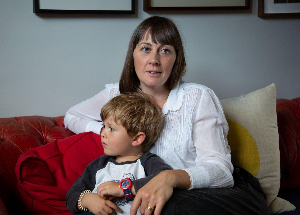
By Victoria Lemmon
I asked Google to define Sovereignty of the body, and this is its answer: Sovereignty of the body, or self-ownership, refers to the fundamental right to autonomy, integrity, and authority over one’s own physical person. Within human rights discourse, it embodies the principle that individuals should be free from non-consensual control over their bodies—whether exercised by institutions, the state, or social expectations.
When I first encountered the concept of sovereignty of the body, I felt an immediate sense of recognition. The words articulated something deeply personal—something I know I lost —and the reason I now do the work I do. Across the journey of conception, pregnancy, labour, birth, and the postpartum period, women can come to believe that others know their bodies and babies better than they do. Yet pregnancy and birth exist at the intersection of physiology and medicine. While women’s bodies are biologically capable of conceiving, growing, and birthing babies, modern maternity care plays an essential role when complications arise. Sovereignty of the body is therefore not about rejecting medical care but about ensuring that women’s decisions regarding their care are respected and supported, and remembering that, ethically, medicine must prove itself against nature, not the other way around.1
My understanding of bodily autonomy was shaped by seven years of secondary infertility. Over time, my sense of ownership over my body began to erode. I recognise it was shaped way before our fertility struggles and played out in the birth of our firstborn. The term, ‘Sovereignty of the body’ has raised questions in me; how can women claim sovereignty over their bodies when we are programmed not to trust them?
From an early age, many children are not encouraged to understand the extraordinary capabilities of their bodies. Menstruation is rarely discussed openly or celebrated as a sign of healthy physiology. Sexuality is often presented through the lens of risk rather than connection. Conception may be described as miraculous, yet the sustained, embodied work of growing a baby receives far less recognition. Pregnancy is an incredible feat of nature that can take years of trying, if you are lucky enough to conceive. For many women, pregnancy can feel like a profound expression of the body’s biological capacity and transformative power. Birth marks another transformation. The transition to motherhood, now increasingly described as matrescence,2 involves deep physical, hormonal, emotional, and social changes. It can feel both expansive and overwhelming. Nurturing a newborn brings moments of intense joy alongside exhaustion, uncertainty, and vulnerability. Despite the magnitude of these changes and transformation throughout the continuum of pregnancy, birth and postpartum, maternity care often unfolds within highly structured systems designed to monitor well-being and identify risk. These systems create fear and doubt, switching on the ‘thinking brain or neocortex. These systems can play a vital role in safeguarding maternal and fetal health, yet they can also feel dominated by protocols, guidelines (often perceived as rules), and rigid timelines rather than individual experience.
Like many women, I entered maternity care believing that professionals knew better than I did. I had been raised to defer to authority. Doctors and midwives were the experts, and I assumed they understood my body better than I ever could. During my first pregnancy, I did little formal preparation for birth; I simply enjoyed being pregnant. I loved watching my body grow and change, just as I had learned to appreciate the rhythm of my menstrual cycle. As my due date passed, I remained calm. I had a normal, healthy pregnancy with no underlying concerns. I trusted that my body and baby would find their own rhythm. Twelve days after my due date, at a hospital appointment, induction was recommended. A membrane sweep was performed, and I was admitted for prostaglandin induction, which I accepted without question after fearful language created doubt. Induction can be an important clinical tool with complex scenarios and individual circumstances, but it can also alter the natural progression of labour in ways that women may not anticipate. I did not realise this until I had lived it.
As labour began, I found the rhythm of contractions fascinating, their rise and fall and the release that followed each one. For a time, I felt deeply connected to my body and to the physiological process unfolding within it. Yet the hospital environment made it difficult to sustain that connection. Bright lights, frequent observations, and constant interruptions disrupted the rhythm and my growing sense of internal safety. Gradually, doubt crept in once again. When my contractions did not fit a standard partogram with the expected timeframe of labour progress, I was advised to have my waters artificially broken. I agreed. Soon after, I was transferred to the labour ward, where a synthetic oxytocin infusion and continuous fetal monitoring commenced. These interventions are common and may be clinically appropriate, but in my case, there were no obvious clinical concerns. Still, my labour experience was transformed without consideration: With wires, drips, and monitoring equipment attached, movement became difficult, and I spent most of my time confined to and around the bed. As contractions intensified, attention shifted to the CTG monitor displaying my baby’s heart rate. I began to feel as though the machine held more authority than my own embodied experience. An epidural was recommended, and I agreed. The heaviness was immediate. I could no longer move my legs and required a urinary catheter. My body felt increasingly managed by others. Eventually, I was told that I had “failed to progress”. I internalised this instantly as my body had failed. I was transferred to the theatre, and although the surgery itself was safe, I remained in the hospital for six days due to complications.
Conversely, my later pregnancies revealed the importance of medical care. After many difficult years, I conceived through IVF at forty-one. Although the pregnancy was healthy, fear shaped many of my decisions. These experiences reveal the delicate balance within maternity care. Physiological birth reflects the body’s innate capacity to labour and to give birth, yet medical intervention can be fundamental when complications arise. The challenge lies in ensuring that care remains collaborative rather than directive and that women feel informed, respected, and central to their decision-making.
Birth is not a disease, women and birthing people are not patients, and most women will labour and give birth safely without intervention. Their chances are even greater when they receive continuity of midwifery care that honours physiological processes and individual autonomy.
My journey through motherhood has taught me how I became distanced from sovereignty over my own body. In response, I trained as a midwife and now am choosing to take ownership of my menopause!
My aim as a newly qualified midwife and birthworker is not to promote one particular type of birth, but to support women in understanding their options and recognising their right to make decisions about their care. For me, sovereignty begins with acknowledging the remarkable physiological power of women’s bodies, while valuing medical care when it is wanted or needed. It is grounded in autonomy, strength, and transformation. It means informed choice, meaningful consent, and the right to ask questions, deciding to request, accept or decline interventions, or take time to reflect. Sovereign decision-making does not prescribe a single birth pathway. For some, it may involve choosing induction or a planned caesarean. What matters is that the decision arises from understanding rather than fear or pressure, and that birth is a physiological process whose physical and emotional integrity can be preserved even within a medicalised setting. When women are supported in listening to their own bodies, they enter motherhood with confidence in both their strength and the support around them. That confidence is something their children will grow up feeling and passing on to future generations.

Author Bio: Victoria is due to graduate from midwifery school in London later this year and has a background as a birth doula, Active birth and hypnobirth educator. She is also a mother to a daughter and a rainbow son following the late pregnancy loss of her twin boys.
1 Wickham S (2026) Whatever happened to the precautionary principle? https://www.sarawickham.com/articles-2/whatever-happened-to-the-precautionary-principle/
2 Athan AM. A critical need for the concept of matrescence in perinatal psychiatry. Front Psychiatry. 2024 Jun 10;15:1364845. doi: 10.3389/fpsyt.2024.1364845. PMID: 38962063; PMCID: PMC11220490. https://pmc.ncbi.nlm.nih.gov/articles/PMC11220490/
Bibliography
Ormsby SM, Keedle H, Dahlen HG. Women's reflections on induction of labour and birthing interventions and what they would do differently next time: A content analysis. Midwifery. 2025 Jan;140:104201. doi: 10.1016/j.midw.2024.104201.
https://www.sciencedirect.com/science/article/pii/S0266613824002845
Buckley SJ. Executive Summary of Hormonal Physiology of Childbearing: Evidence and Implications for Women, Babies, and Maternity Care. J Perinat Educ. 2015;24(3):145-53. doi: 10.1891/1058-1243.24.3.145. PMID: 26834435; PMCID: PMC4720867.
https://pmc.ncbi.nlm.nih.gov/articles/PMC4720867/
Kirsten Small: Fetal monitoring information you can trust
Victoria's View From A Bridge (2025)
Please feel free to download and share a pdf of this article. If you wish to use AIMS copyright material please see aims.org.uk/general/aims-copyright
If you found this article helpful please consider becoming an AIMS member or making a donation to support our work. We are a small charity that accepts no commercial sponsorship, in order to preserve our reputation for providing impartial, evidence-based information.
AIMS supports all maternity service users to navigate the system as it exists, and campaigns for a system which truly meets the needs of all.