
AIMS Journal, 2026, Vol 38, No 2
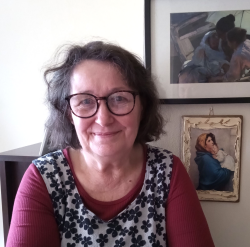
By Alex Smith
Welcome to the June 2026 edition of the AIMS journal. This issue is about the sovereignty of the body in pregnancy and childbirth. If you are not entirely sure what that means, read on!
Sovereignty of the body refers to the supreme and absolute right of an individual to exercise control over what is done by others to their own body. It is a foundational principle of bodily rights (or bodily integrity) that prioritises autonomy in matters of personal health.
In pregnancy and childbirth, sovereignty remains intact when a woman actively and wholeheartedly chooses medical support when it feels timely and appropriate. But, when a woman feels that she has to submit to an aspect of maternity care she doesn't want, and especially when fear is used to persuade her - if at any point she asks, “Am I allowed” - if she doesn’t feel she has a choice - then her sovereignty (or autonomy) is being wrongly overpowered.
Sovereignty of the body has been regarded as sacrosanct for a very long time. The English philosopher John Stuart Mill (1806-1873) wrote one of my favourite quotes:
That the only purpose for which power can be rightfully exercised over any member of a civilized community, against his will, is to prevent harm to others. … In the part which merely concerns himself, his independence is, of right, absolute. Over himself, over his own body and mind, the individual is sovereign.
(On Liberty 1859)
Although he uses the male pronoun, he believed in equal rights for the sexes and in 1869 wrote, ‘The Subjection of Women’.
Sovereignty of the body for women plays a central part in the 15th century Arthurian tale of Sir Gawain’s wedding with Lady Ragnall.1 In the story, Arthur is asked to find the answer to the riddle, “What is it that women desire most, above all else? “ The answer turns out to be, “What we desire above all else is to have sovereignty, to rule our lives as we see fit, to not be beholden to another.”
Even earlier than this, The Wife of Bath in the Canterbury Tales (written between 1387 and 1400)2 tells a very similar story but takes women’s sovereignty a step further saying that women also want to hold the sovereign power in their married lives. You can read more about how this links with informed decision making and consent in this AIMS article from 2021.
Sovereignty is the very essence of informed decision making and consent,3 where AIMS (and the law) reassures women that they do not need the permission or approval of another person when making decisions about their pregnancy and birth. Women may feel that they would prefer someone else to be making or approving their decisions at this time, and that is fine, but if the tables were turned and women could legally be taken from their homes by force to undergo procedures, examinations and treatments against their will, it would be terrifying; akin to the worst of war crimes. This is why we turn to ethics committees, lawyers and human rights committees, and why the sovereignty or integrity of the body in pregnancy and childbirth must be protected at all costs.

The concept of sovereignty is not just about the law though. It is richer and more nuanced than that. For this issue we asked a number of people, who have been working in the birth world for many years, to write about what sovereignty of the body in pregnancy and childbirth means to them.
We open with Artist and birth assistant Tamara Blakemore who tells, in words and through her art, how birth, for her, is one of the most profound expressions of bodily sovereignty.
This is followed by Energy Psychologist and Evolutionary Midwife Sherine Lovegrove describing sovereignty as ‘coming home to yourself’, while Rebeka Tabobondung writes from Canada about the way that vulnerable pregnant women from rural areas have been flown far from home to give birth, alone, frightened and separated from their families their language and their culture - with sovereignty clearly having strong connections with the concept of home in more ways than one.
AIMS volunteer Catherine Williams, takes an anthropological view of sovereignty or bodily autonomy, believing that it is something that the culture you are born into may give to you, or not. As an atheist, Catherine says that sadly, bodily autonomy for childbearing women in the UK today is not guaranteed, not automatically conferred by an act of God, but is a cultural construct that has to be consciously upheld. This is especially so for marginalised women. As Doula and educator Mars Lord explains, for Black and Brown women, understanding one's rights - one’s sovereignty - is not the same thing as accessing them, and researcher and writer Gemma Mckenzie goes further, asking whether any woman is ever free to truly exercise sovereignty over their body.
This rather depressing thought, and the implications of living in a society that has forgotten to or chosen not to uphold a women’s right to sovereignty of the body, has been explored in literature, most notably in Margaret Attwood’s, The Handmaid’s Tale. More recently, ‘The Last Midwife’ by Karen Lawrence has been thrilling and alarming readers in equal measure. In this issue, Karen writes about sovereignty as freedom, and AIMS volunteer Kath Revell offers a wonderful review of Karen’s book.
Another book that has been exciting AIMS readers is Dr Kirsten Small’s ‘Monitoring Your Baby in Labour: An Evidence-Based Guide to Help Plan Your Birth’. In Kirsten’s own words:
“Here’s the main point this book is going to make - CTG monitoring is nonsense!”
AIMS volunteer Camille Del Pozo reviews this important new evidence-based resource for parents and health practitioners. Informed with this reliable information, making decisions about monitoring in labour is easy enough, but asserting them is a different matter. Alex Smith and Dr Kirsten Small co-present Kirsten Small’s guidance on how to communicate decisions in a way that will be respected.
Rounding up the themed section of the journal, and with thanks to Myrthe Glasbergen from Beyond Psychology, regenerative systems designer, birth worker, and community weaver Kai Njeri from Tanzania, shares her beautiful article on reclaiming birth sovereignty. Followed by midwife, president of the Union of Independent Midwives in Greece, and an IBCLC certified breastfeeding consultant, Ioanna Vasilaki, who speaks on the demise of natural childbirth.
We have a very important article about the impressive Action for Accreta campaign that aims to improve the experience of birth for women whose pregnancies are complicated by a too deeply attached placenta. AIMS volunteer Jo Dagustun interviews Radical Midwife Katherine Hales, followed by a Scottish Maternity update from Camille Del Pozo and Anne Glover. Then we have the Campaign Team’s update, ‘Ready for the year ahead’, and we round up as always with their very productive ‘What have we been up to’ page.
"New AIMS Guide - coming soon!
The latest addition to our respected series of AIMS Guides - the AIMS Guide to Breech Birth - is in the final stages of preparation. Principal author Joy Horner is a Birthkeeper, mentor, and childbirth educator with more than two decades of midwifery experience. A Registered Midwife for 21 years, including 16 years in independent practice, she developed a deep, practical expertise in supporting breech birth while working alongside Mary Cronk MBE for five years.
The book provides essential, evidence-based information to help pregnant women and birthing people make decisions should their baby remain in the breech position towards the end of pregnancy. It's also a great resource for birth workers, midwives, doctors and anyone else supporting parents who discover that their baby is breech.
Now we need your help to bring the book to its audience! We have launched a Crowdfunder Campaign with all donations going towards publishing our latest guide. Please follow our social media posts or follow this link to donate. Make a Donation
We are very grateful to all the volunteers who help in the production of our Journal: our authors, peer reviewers, proofreaders, website uploaders and, of course, our readers and supporters. This edition especially benefited from the help of Anne Glover, Zanna Szlachta, Katherine Revell, Hannah Northern Thakur, Salli Ward, and Josey Smith.
The theme for the September 2026 issue of the AIMS journal is breech birth. If you would like to share your thoughts on this, or if you would like to contribute your ideas for future authors and journal themes, please contact Alex at: alex.smith@aims.org.uk
1 Stories to Grow by website, ‘King Arthur and the riddle: The wedding of Sir Gawain and Lady Ragnell’: storiestogrowby.org/story/sir-gawain-the-lady-ragnell.
2 Melville A (2019), ‘Female ‘soveraynetee’ in Chaucer’s ‘The Wife of Bath’s Prologue and Tale,’ British Library website: https://brewminate.com/female-soveraynetee-in-chaucers-the-wife-of-baths-prologue-and-tale/
3 AIMS (2021) Decision-making and consent. Journal Vol. 33, No. 3
https://www.aims.org.uk/journal/index/33/3
Please feel free to download and share a pdf of this article. If you wish to use AIMS copyright material please see aims.org.uk/general/aims-copyright
If you found this article helpful please consider becoming an AIMS member or making a donation to support our work. We are a small charity that accepts no commercial sponsorship, in order to preserve our reputation for providing impartial, evidence-based information.
AIMS supports all maternity service users to navigate the system as it exists, and campaigns for a system which truly meets the needs of all.