
AIMS Journal, 2026, Vol 38, No 2
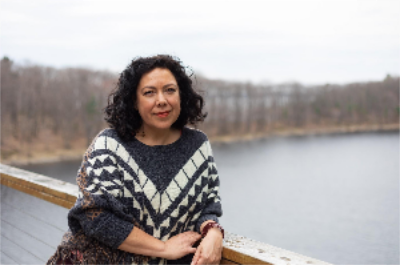
By Rebeka Tabobondung
Giving birth has been the single most powerful moment of my life, one I now understand holds the gift of Creation itself. It was also the most difficult and painful experience I have known, one where my body pulled me close to the Spirit World. I breathed through the seemingly endless crashing waves of my uterus contracting to open, and then, near ten centimeters, plunged into a downward direction, pushing with the surge and power of a freight train. I felt I was dying, knowing I could not sustain the internal pressure in my body for much longer. At first I hovered alone in a sacred dimension of birth and surrendered to the opening of the veil, my body and Spirit bringing forth another life. I was not alone in my labour; my son was making his own perilous journey Earthside, his small body and tiny bones pushed and squeezed, bending with my body and the call of our world, all before his first breath.
Through those dark waves of Creation, and the moments of rest in between them, I was comforted by the knowledge and strength of the thousands of generations of women who had birthed before me. I leaned into the faces of my partner, sister, and the midwives who held and massaged my body, providing my care through their knowledge, skills, guidance, and kindness. I chose to believe in my body, rooted in Creation, and when my son was finally born into a warm birth pool on Rusholm Road in Toronto in 2005, I felt I could accomplish anything in the world.
I am a woman of mixed ancestry. My mother was born with the aid of midwives in Holland, and my late father was of Anishinabe Indigenous descent, raised by his grandmother Lucy, who, according to him, was a community midwife just before Indigenous midwifery was banned in Canada. The summer I was pregnant, my father and I spent a great deal of time together building a cabin on our land in Wasauksing First Nation, along the beautiful and rugged shores of Lake Huron/Mindoo Gamii. The water was my constant companion; every day I swam and even danced, my body suspended and held in its cool depths. I wanted to have my baby in my community of Wasauksing, but at that time, and even still today, no midwifery services are available on our Island.
As a pregnant mother, I knew I was on the cusp of entering a powerful life stage, and I felt compelled to learn more about the transition to Motherhood from an Anishinabe Indigenous perspective. In 2005, very little had been published on Indigenous birth knowledge. I knew intuitively that it was so much more than a superficial, medicalised experience, yet in mainstream media, birth and motherhood were most often presented that way. As a community researcher and filmmaker, I offered my sema (sacred tobacco) to some of the women of my Wasauksing community and asked them to share their birth knowledge with me. I wanted to learn about the Spirit of Birth. Through their storytelling, they opened a powerful trove of knowledge that had gone underground, protected by their grandmothers and families who had thankfully survived the dark days of forced assimilation under Canada's residential school system, which operated from the 1850s to the 1960s.
The late respected Elder and knowledge keeper Marie Anderson, from Wasauksing and Shawanaga First Nation, shared that her mother, who had been a midwife, told her about sitting under a shaded tree, listening to her own mother’s prophesy: "When your baby is going to be born, it's going to be a white man to hold the baby, and it's not going to be good."
Indigenous women and their families were forced to live on reservations, cut off from their traditional lands and lifestyles. Their food rations and sexuality were controlled by Indian Agents who enforced dispossession and assimilation policies on behalf of the Government of Canada. Their primary targets were women and children, and this included the separation of mother and child at birth. Indigenous women were forced to give birth in hospitals, on their backs, their pubic hair shaved and their birth sovereignty stripped away through non-consenting interventions determined by doctors alone. The hospital was a place of danger and racism, a place they were compelled to travel to during their most vulnerable moments, where their babies could be legally taken away and forced sterilisations were also performed.
Systems of colonisation stripped away Indigenous birth sovereignty, which upholds respect for a mother's voice, her needs and desires, and above all else, demands that she be treated with kindness. Today there is a growing movement of families, communities, and midwives doing the work of restoring birth sovereignty and the deep honour and respect given to the Life-Givers: the women, the babies, and the midwives of our communities.
Kindness was an essential ingredient in ensuring the health of an unborn child, and community members went to great lengths to ensure that pregnant mothers and fathers did not need to worry about their safety or where their next meal was coming from. Yes - the father was also considered to be pregnant, because the Spirit of the unborn child would follow and be influenced by him as well. Both parents shared the responsibility of caring for the physical and spiritual health of their unborn baby, and the community did everything it could to support them. The father, therefore, carried deep responsibility: he was restricted from taking life out of respect for life, abstaining from hunting or fishing. The community recognised that if the mother felt scared or stressed, the baby would feel it too, and could grow into a stressed person, and so the community stepped up to meet the family's basic needs. Today, Western science is catching up: stress cortisol levels in pregnant mothers have been shown to cross the placenta and appear in the hair samples of toddlers.
During my own birth experience, I was treated with kindness and felt my birth sovereignty was respected, and that experience sparked a lifelong commitment to learning and sharing the gifts of Indigenous birth knowledge so that they may be reclaimed. I have since travelled to many Indigenous communities across Turtle Island/Canada, visiting with the few remaining traditional midwives, knowledge keepers, and families who shared their own stories of birth sovereignty. While visiting Chisasibi, Quebec in 2025, I met Elder Jane Mathew, who at nearly 90 years old is one of the oldest traditional Cree midwives still practising in the world. I asked her what the most important teaching that communities, families, and health providers should follow when caring for a pregnant mother? Jane replied: "Kindness." She explained that kindness means listening to and respecting the mother's wishes for her birth, including where she chooses to give birth and who attends, whether at a hospital, birth centre, or close to the Earth in a teepee.
This kindness also sparks immense healing. Like in Wasauksing, the midwives of Chisasibi were replaced by doctors, and after their hospital was intentionally flooded to make way for the James Bay Hydroelectric Project in 1974, doctors ceased providing in-community obstetric care, with devastating consequences. Located along the southern shoreline of Hudson's Bay near Canada's far north, Chisasibi has spent the last 30 years evacuating its pregnant mothers to give birth at the nearest maternity hospital in Val-d'Or, Quebec, over 1,300 kilometres away. Vulnerable pregnant women were flown alone and frightened, separated from their families for up to three weeks, and from their language, and culture. Their babies' birth certificates list Val-d'Or rather than their own Cree Nation of Chisasibi.
Today, with the support of the Cree Health Board and allied Québécois midwives, Chisasibi is restoring birth in-community through providing in-community midwifery care and launching an Indigenous Midwifery Training Program, developed in collaboration with traditional Cree midwives, their northern Inuit neighbours, and members of the Ordre des Sages-Femmes du Québec. Restoring birth in-community means that fathers and families are honoured with the experience of supporting and witnessing the births of their newest members, and they are often forever changed and bonded to their children by it. Birth sovereignty is healing for the whole family and nation.
In my own community, Elder Marie Anderson shared the Anishinabe concept of godparents with me: "It was the first people who showed up to meet that child when they were born. They were the ones to be the baby's sponsors - the godparents." My son Zeegwon is now 20 years old, and I reflect on my journey of sovereignty over my body and the Spirit of Birth in both childbirth and parenting. My sister Jessica Kraitberg was present to witness and support me during his birth, and they maintain a deep connection and bond to this day. She has been his most natural godparent.
Over the last 20 years I have continued to document and share Indigenous women's birth knowledge through community research, filmmaking, publishing, and media creation. I am grateful to the Indigenous midwives in Toronto who provided my care, but this experience remains unavailable to the majority. There is still much kindness to give.
Author Bio: Media and story creator Rebeka Tabobondung is the founder and Editor-in-Chief of MUSKRATMagazine.com, a leading digital Indigenous arts and culture magazine. Rebeka is also a filmmaker, writer, poet, and Indigenous knowledge researcher with a strong body of work focused on Indigenous birth knowledge. Rebeka’s latest innovation is the interactive Spirit of Birth 8-part series on the Aboriginal Peoples Television Network that follows Indigenous midwives, knowledge keepers, and birth workers, as they restore birth in their communities (see also: https://muskratmagazine.com/muskrat-presents-spirit-of-birth-a-short-doc-restoring-indigenous-birth-practices/). Rebeka co-founded the Gchi Dewin Indigenous Storytellers Festival in Wasauksing First Nation along Lake Huron/ Mnidoo Gamii, where she is a member of the beaver/amik clan/dodem and served as elected Chief-Councillor. In 2021, Rebeka co-edited the anthology Indigenous Toronto, which won the Speakers Book Award and Toronto Book Award.
Editor’s note: If you have found Rebeka’s article as interesting as we did, you may also like to read the following:
Rebeka’s - Journal: Indigenous Birth Knowledge and Stories for My Baby
This study 2025 - Indigenous Peoples’ responses to evacuation for birth in Ontario: conceptualizing risk through an Indigenous midwifery-led approach
The National Council of Indigenous Midwives (NCIM) Position Statement on Indigenous Child Apprehensions
And from The Indigenous Foundation - Sixties Scoop
Editor’s reflection
When Rebeka wrote, “Through those dark waves of Creation, and the moments of rest in between them, I was comforted by the knowledge and strength of the thousands of generations of women who had birthed before me”, it put me in mind of ‘Mamma Midwife’, a book about birth written for children by Christy Tyner.
In the story Mamma Midwife (a mouse) takes her daughter Miso to help at the birth of Mother Bear’s second cub. Mother Bear is in strong labour in a birth tub in the forest. Mamma Midwife whispers something in Mother Bear’s ear and soon afterwards the cub is born. Later, Miso asks her mamma to tell her what she whispered to Mother Bear, and she replies:
“I asked her to imagine that her mom, her grandma, her great-grandma and all of the millions of mommies from everywhere in time were gathered around her in a circle. Together, we imagined that they were sweetly singing a special song, just for her.”
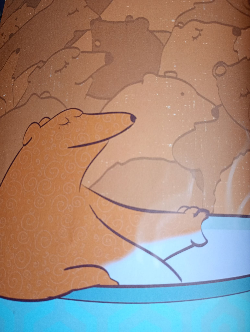
“So Miso’s mamma sang the simple little song for her daughter as they sat on their porch and watched the sun rise, the way it does every morning : perfectly, and without instruction.”
“I am powerful, I am strong
I am like the ocean’s song
I am resilient, I am wise
I am like the sunrise
I am steadfast and divine
I am like the stars that shine”
Included with kind permission of author and artist, Christy Tyner.
Please feel free to download and share a pdf of this article. If you wish to use AIMS copyright material please see aims.org.uk/general/aims-copyright
If you found this article helpful please consider becoming an AIMS member or making a donation to support our work. We are a small charity that accepts no commercial sponsorship, in order to preserve our reputation for providing impartial, evidence-based information.
AIMS supports all maternity service users to navigate the system as it exists, and campaigns for a system which truly meets the needs of all.