
AIMS Journal, 2026, Vol 38, No 2
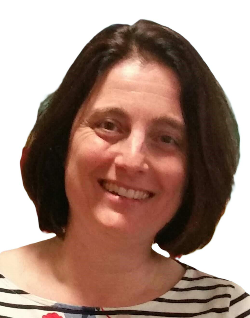
By Catherine Williams
The Editor has asked me, as an AIMS volunteer, to say something about the origin of my (as she puts it) ‘unwavering commitment’ to the legal right in the UK to decline recommended care;1 the right of every pregnant and birthing woman who has ‘mental capacity’ to decline any medical intervention, even if she and her unborn baby should die following her decision. And also about my equally strong attachment to women’s human rights in childbirth.2
My motivation for being ‘involved’ as a lay person in the maternity world has always been rooted in a felt sense of the human dignity of women, knowing the indignities my mother endured when I was born. She never forgot and nor will I. But I’ll try to pinpoint key factors, for me, beyond the impulse to protect my mum.
How I see things is shaped by being trained originally as a biologist, having no religious beliefs, and more recently studying biosocial health anthropology as a postgrad. Relevant, too, that I had a childhood rich in talk and learning at home about history, geography, archaeology, and natural history. ‘Humans as a species’ and ‘why a right to bodily autonomy is important’ are things I think about consciously today. Reflecting as asked, I’ll map back from my understanding now into childhood, trying to pick out some key influences, then forward again in time, to say something about the importance, as I see it, of midwives and obstetricians consciously defending women’s rights and being supported to do so.
A social species
We humans are primates. We are born vulnerable, relational, existing only in relation to our mother and others; needing milk; needing touch; unable to survive on our own.3
To me, it seems clear that we are not born with ownership of our body. Not in the sense of having freedom to decide where we go, when and how we eat and drink, who touches us, nor necessarily - as we mature - what work we will do to ensure our survival, how and where we live, whether we reproduce, and who with.
As a highly social and cultural species, we humans live in a web of cultural norms. These vary enormously between cultures and through time and are encouraged or enforced by rewards and by threat. Positive social signals, actual material rewards, or social exclusion and sometimes violence.4
These motivational factors encouraging us to be ‘good citizens here’ vary in how they operate. Smoking in a public place may get you a monetary fine from a local ‘authority’ (a group of humans with at least some power over other humans), or visible or audible signals of disapproval from others. That cigarette probably won’t land you in prison. But if you appear in a public space with a weapon and behave aggressively, in many places you can expect an armed response by the local authorities to your rule-breaking - unless you are representing the local warlord, ruler, or legal system yourself.
When it comes to ideas about the body and kinship, the body and sexual relationships, and the birthing and parenting of children, all societies seem to have cultural expectations rather than an ‘anything goes’ approach.5 We often think, rightly, of religion as containing many rules about these sorts of things.6
Bodily autonomy, I believe, is something that the culture you are born into may give to you or not give to you, and what you experience may depend on things such as your age or your sex.
The cultural life - how humans live together
In deep time all humans lived in forager societies, gathering plants and hunting, doing a bit of horticulture maybe. Using various strands of evidence, researchers suggest it is probable at least some of those societies were more-or-less sex-egalitarian and status egalitarian (although this may not have meant that everyone, for example women and men, had exactly similar roles and ‘rights’ in every way).7 Other forager societies seem to have been hierarchical and slave-owning - well before humans began to organise their affairs using what we recognise as cities or states (from which point, humans exploiting and often enslaving other humans became a depressingly regular part of the picture).8 Based on this and other evidence, I think of humankind as a flexible species which has had diverse approaches to living the social life and varied in the extent to which people have controlled the bodies and lives of others.
We now typically live in patriarchal societies9, shaped by the interests of older men and the influence or legacy of a variety of religions and other human ‘institutions’ (grouped norms, which we observe voluntarily or under some duress). The laws and norms that have evolved over time often include ‘moral laws’ about the human body and the proper relations between people. Modern laws in nation states may, as here in the UK,10 state or imply an absolute lack of hierarchy among people and full equality for all, regardless of personal characteristics (age, sex, sexuality, ethnicity, etc). Citizens may then debate to what extent reality matches the ideals the law is drafted to uphold, sometimes persuading communities and politicians to take action to lessen inequality and lack of equity.11
However, laws are not always framed to support and enforce equality of all people. When Margaret Atwood wrote her novel ‘The Handmaid’s Tale’12 she famously included institutional denial of bodily autonomy for some people in the fictional state of Gilead (notably, the fertile Handmaids are forced to bear children) and institutional acts of violence in forms which have been perpetrated by real totalitarian regimes.
There is a bleak logic to the coercive, sometimes violent, and anti-autonomy things done by those with power in Atwood’s imagined patriarchal state. It serves the survival and the material and reproductive success of one group - the powerful men of Gilead. I find the state of Gilead abhorrent, but had I been raised there as a child with privileged parents, I can’t assume that I would think so.
(If you are finding this all rather too bleak, be cheered by the view of Professor Ruth Mace, a UCL evolutionary anthropologist, that the world dominance of patriarchy need not last forever.13 And yes, humans are marvellous cooperators, capable of altruism and care, and in that there is also hope.14 But a full appreciation of our history and our capacities does mean, for me, that it is important not to be over-committed to the idea of benign cooperation as our default ‘nature’.15)
Shaping values – time, place, narratives
I reflect that my upbringing - the cultural norms I was immersed in - did shape my ideas about how humans ‘should’ or ‘should not’ treat each other, in a lasting way. When I was seven, in the year when I also read ‘Swallows and Amazons’,16 my father gave me a non-fiction book which has never left me. It was a Puffin Book, ‘To be a Slave’, by Julius Lester.17,18 A UK reprint of a US children’s book of the same name. It contains extracts from the oral testimony of people formerly enslaved in what is now the United States. Some of the texts were collected by nineteenth century abolitionists and edited to be more ‘literary’. Some were collected verbatim by the US Federal Writer’s Project in the 1930s. Of course, the selected testimony is geared to what is appropriate to share with children - a fuller understanding followed in my adult life. I open it now, and the narrative and explanatory text around the testimony seems a little dated in places. But if I ask myself why I grew up with a deep belief that oral testimony matters - what people say in their own words about themselves and their experiences - then I know it begins with this book. And discussion at home about right and wrong, about what human rights are, and why they matter.
Why it was that the idea of human rights, linked to the vision of ‘a postwar world based on four basic freedoms; freedom of speech, freedom of religion, freedom from want, and freedom from fear’19 featured in the thought-world of my childhood occurred to me recently while watching ‘Call the Midwife’. When I was born, World War II had ended very much in living memory (my mother remembered her hated Mickey Mouse gas mask very well20). The urgency of continuing to resist ugly, discriminatory thinking about others, and the resulting atrocities humans can too readily normalise, was very much in my parents’ minds, I think. The neatest summary may be that I was raised as a humanist.
“Roughly speaking, the word humanist has come to mean someone who:
trusts to the scientific method when it comes to understanding how the universe works and rejects the idea of the supernatural (and is therefore an atheist or agnostic)
makes their ethical decisions based on reason, empathy, and a concern for human beings and other sentient animals
believes that, in the absence of an afterlife and any discernible purpose to the universe, human beings can act to give their own lives meaning by seeking happiness in this life and helping others to do the same.”
(Humanists UK)21
So I believe in bodily autonomy, what this Journal issue calls ‘sovereignty of the body’ because of the historical circumstances which led me to be born and raised as I was, where I was. I grew up thinking both that all people matter equally and supporting human rights in the UN Declaration of Human Rights sense.22 Then, by chance - lucky chance, I feel - my volunteering in adult life has been focused on supporting and promoting key legal and human rights for every woman giving birth (though until Birthrights came along in 2013, I would not have used the language of human rights as readily as I do now).23,24
Women’s rights in pregnancy and childbirth – secure or not?
You may ask whether taking a rights-based approach matters when supporting women in maternity contexts, as AIMS does on its Helpline. Sadly, bodily autonomy for childbearing women in the UK today is not guaranteed. Despite the legal rights they have, there are women who report coercion and unwanted touching and intervention in maternity care - we hear from women with these experiences on the Helpline25 and similar experiences have been documented by the charity Birthrights26 and by academic researchers.27
I also note that we have seen forced obstetric intervention, including caesareans, in the United States in recent time28 - it could not happen here, could it? Well, yes. Rare, but it can happen when a woman lacks mental capacity to make decisions for herself, for example, because of mental illness. Judicial reasoning in recent cases claims to support bodily autonomy if a woman has mental capacity even while finding the woman to lack capacity and ordering a caesarean, but the reasoning about the particular situations can still be rather disturbing reading for those worried about the possible erosion of women’s rights. Such cases merit careful attention.29,30,31,32
How much should we worry about what the future may hold for reproductive rights and human rights more generally? Difficult to know, of course. As I finished writing this piece I read a newspaper interview with a politically influential US Christian evangelist who thinks that married women should not have the vote.33 My maternal great-grandmother did not have the vote when my Nana was born here in England early in the twentieth century.34 Abortion was not yet legal when I was born (and wasn’t in Northern Ireland until 2020).35, 36 While I was a baby my parents bought a house with a jointly earned deposit and the solicitor advised my father he should have the house in his sole name (he didn’t agree). The Equal Pay Act, mainly benefiting women compared to men, was passed a few years later. As a young adult in the 1990s I would realise that many legal rights we in the UK may think are ‘usual’ and ‘normal’ are on the contrary new in historical terms, fragile in world context, and ever-vulnerable. Particularly women’s reproductive rights.37
Midwives and obstetricians may not always realise how important their role is in upholding women’s right to bodily autonomy. I believe they should be trained to play their part well and then supported to do so throughout their careers by the whole maternity care system, everywhere in the UK. It can be a tough thing if you find yourself supporting and defending a woman’s decision when it makes no sense to you personally. But that’s your job, ethically and legally.38 A few times in past years I’ve been in NHS reflection/training sessions where NHS staff presenting case studies mocked or explicitly criticised women who had made ‘non-normative’ birth decisions.39 As a lay person present, I was involved each time in raising this with senior staff. Because the right to bodily autonomy matters - pregnant and birthing women are more than a suitcase for safe delivery of a baby. And currently in the UK, whether you support it or not, the right to bodily autonomy is a right that childbearing women have.
Author Bio: Catherine is an AIMS volunteer (Helpline and Campaigns Team). In maternity she has previously worked as a childbirth educator and volunteered as a service user voice rep at local, regional, and national level. She enjoys being involved in maternity services research. Her other experience includes a decade spent working as a property lawyer, policy advice work done at the Law Society and for third sector organisations in maternity, and roles at local and regional level in community engagement and public involvement.
1Poole, N. (2016), “A common law right to autonomy of treatment”, Royal College of Surgeons, 10 November, available at: https://www.rcseng.ac.uk/news-and-events/blog/the-right-to-autonomy-of-treatment-is-a-common-law-right/ (accessed 9 May 2026).
2 “Human rights in maternity care: the key facts”. (2019), Birthrights, 6 March, available at: https://birthrights.org.uk/factsheets/human-rights-in-maternity-care/ (accessed 7 April 2026).
3 Hrdy, S.B. (2011), Mothers and Others - The Evolutionary Origins of Mutual Understanding, Harvard University Press.
4 Henrich, J. and Muthukrishna, M. (2021), “The Origins and Psychology of Human Cooperation”, Annual Reviews, 4 January, doi: 10.1146/annurev-psych-081920-042106.
5 “eHRAF World Cultures”. (n.d.), available at: https://ehrafworldcultures.yale.edu/ (accessed 10 May 2026).
6 Bendixen, T., Apicella, C., Atkinson, Q., Cohen, E., Henrich, J., McNamara, R.A., Norenzayan, A., et al. (2023), “Appealing to the minds of gods: religious beliefs and appeals correspond to features of local social ecologies”, Religion, Brain & Behavior, Informa UK Limited, pp. 1–23, doi: 10.1080/2153599x.2023.2178487.
7For example, see Dyble, M., Salali, G.D., Chaudhary, N., Page, A., Smith, D., Thompson, J., Vinicius, L., et al. (2015), “Sex equality can explain the unique social structure of hunter-gatherer bands”, Science, American Association for the Advancement of Science, Vol. 348 No. 6236, pp. 796–798, doi: 10.1126/SCIENCE.AAA5139.
8 Singh, M. and Glowacki, L. (2022), “Human social organization during the Late Pleistocene: Beyond the nomadic-egalitarian model”, Evolution and Human Behavior: Official Journal of the Human Behavior and Evolution Society, Vol. 43 No. 5, pp. 418–431, doi: 10.1016/j.evolhumbehav.2022.07.003.
9 Saini, A. (2023), “How did patriarchy actually begin?”, BBC, BBC, 30 May. (see also 13 below – matriliny should not be assumed to be the same as matriarchy)
10 Equality and Human Rights Commission. (2019), “What are human rights?”, available at: https://www.equalityhumanrights.com/human-rights/what-are-human-rights (accessed 10 May 2026).
11 “Real-Life Stories of the Human Rights Act in Action”. (2026), British Institute of Human Rights, available at: https://www.bihr.org.uk/get-informed/the-human-rights-act-in-real-life (accessed 10 May 2026).
12 Atwood, M. (2010), The Handmaid’s Tale, Vintage Classics, London, England.
13 Mace, R. (2022), “How did the patriarchy start – and will evolution get rid of it?”, The Conversation, 20 September.
14 Christakis, N.A. (2020), Blueprint: The Evolutionary Origins of a Good Society, Little, Brown & Company, New York, NY.
15 Sapolsky, R.M. (2017), Behave: The Biology of Humans at Our Best and Worst, Penguin Press.
16 If I were publishing an academic paper, I might state my positionality. Educated, white, and middle class, born in the UK to parents who were able to go to grammar school and then university, in families where that life path was new.
17 Lester, J. (2000), To Be a Slave, Puffin, Hawthorn, VIC, Australia.
18 For brief commentary on ‘To be a Slave’ see https://www.ebsco.com/research-starters/literature-and-writing/be-slave-julius-lester
19See text accompanying image for “The Golden Rule”. (n.d.). , available at: https://www.un.org/ungifts/golden-rule (accessed 9 May 2026).
20 BBC. (2005). “Mickey mouse gas mask”.
21 “Definitions of humanism”. (2026). Understanding Humanism, available at: https://understandinghumanism.org.uk/what-is-humanism/definitions/ (accessed 9 May 2026).
22 United Nations. (1948), “Universal Declaration of Human Rights”, United Nations, available at: https://www.un.org/en/about-us/universal-declaration-of-human-rights (accessed 10 May 2026).
23 AIMS. (2020). “Making decisions about your care”, available at: https://www.aims.org.uk/information/item/making-decisions (accessed 7 April 2026).
24 “Human rights in maternity care: the key facts”. (2019), Birthrights, 6 March, available at: https://birthrights.org.uk/factsheets/human-rights-in-maternity-care/ (accessed 7 April 2026).
25 “AIMS Submission to the National Maternity and Neonatal Investigation”. (2026), AIMS, available at: https://www.aims.org.uk/campaigning/item/submission-to-national-maternity-and-neonatal-investigation (accessed 10 May 2026).
26 “End coercive practices in maternity care”. (2025), Birthrights, 29 October, available at: https://birthrights.org.uk/campaigns-research/end-coercive-practices-in-maternity-care/ (accessed 10 May 2026).
27 For example, see Brione, R. (2020), “Non-Consented Vaginal Examinations: A Hidden Violation?”, Durham University, 16 October, available at: https://www.durham.ac.uk/research/institutes-and-centres/ethics-law-life-sciences/about-us/blogs/obstetric-violence-blog/non-consented-vaginal-examinations-a-hidden-violation/ (accessed 10 May 2026); also, Nelson, A. (2021), “Vaginal examinations during childbirth: Consent, coercion and COVID-19”, Feminist Legal Studies, Springer Science and Business Media LLC, Vol. 29 No. 1, pp. 119–131, doi: 10.1007/s10691-021-09453-7.
28 For example, see Yurkanin, A. and Maney, S. (2026), “They didn’t want to have C-sections. A judge would decide how they gave birth”, ProPublica, 14 March, available at: https://www.propublica.org/article/florida-court-ordered-c-sections (accessed 15 March 2026).
29 For example, see Reed-Berendt, R. (2023), “‘The baby has to come out’: Court-authorised caesarean when subject-matter and litigation capacity are disputed”, Open Justice - Promoting Open Justice in the Court of Protection, 3 March, available at: https://openjusticecourtofprotection.org/2023/03/03/the-baby-has-to-come-out-court-authorised-caesarean-when-subject-matter-and-litigation-capacity-are-disputed/ (accessed 10 May 2026).
30 For example, see Atherton, S. (2023). “A Court Of Protection Application To Authorise A Planned Caesarean Section”, Stephensons Solicitors LLP, available at: https://www.stephensons.co.uk/site/blog/civil-liberties-blog/a-cop-application-to-authorise-planned-c-section (accessed 10 May 2026).
31 Reed-Berendt, R. and Ganguli-Mitra, A. (2025), “The relationship between capacity and credibility: implications for epistemic injustice”, Medical Law Review, Oxford University Press (OUP), Vol. 33 No. 4, p. fwaf039, doi: 10.1093/medlaw/fwaf039. (see section on childbirth)
32 Halliday, S. (2019), “Court-authorised obstetric intervention: insight and capacity, a tale of loss”, in Pickles, C. and Jonathan, H. (Eds.), Childbirth, Vulnerability and Law: Exploring Issues of Violence and Control, Routledge, London, England, pp. 178–203.
33 Miller, J. (2026), “Christian nationalist pastor Doug Wilson: ‘I’m starting a fight’”, FT, Financial Times, 8 May.
34 Women over the age of 30 who met a property qualification gained the vote in 1918 - see “Women get the vote”. (2026), UK Parliament, available at: https://www.parliament.uk/about/living-heritage/transformingsociety/electionsvoting/womenvote/overview/thevote/ (accessed 10 May 2026).
35 Abortion became legal in certain circumstances on 27 April 1968 – see “History of Abortion Law in the UK”. (2014), Abortion Rights, 15 December, available at: https://abortionrights.org.uk/history-of-abortion-law-in-the-uk/ (accessed 10 May 2026).
36 Rough E., (2025) Abortion in Northern Ireland: recent changes to the legal framework. House of Commons library. https://researchbriefings.files.parliament.uk/documents/CBP-8909/CBP-8909.pdf
37For example, see United Nations. (n.d.). “Gender Equality”, United Nations, available at: https://www.un.org/en/global-issues/gender-equality (accessed 10 May 2026); and “Progress on the Sustainable Development Goals: The Gender Snapshot 2025”. (2025). UN Women – Headquarters, available at: https://www.unwomen.org/en/resources/gender-snapshot (accessed 10 May 2026);
38 British Institute of Human Rights, Birthrights and Royal College of Midwives. (2016), Midwifery and Human Rights - A Practitioner’s Guide, British Institute of Human Rights, London.
39 In one case the gist was, ‘These women who birth at home when they have been advised not to need to think about how staff will feel if woman or baby should die – it’s not on for staff to be put in that position by these women’. An assertion I refuted on the spot. The right to bodily autonomy does not include a qualification that ‘in exercising your right you must not cause worry, fear, or distress for other people’. Failures of the maternity system to support staff properly should not be misattributed as a responsibility on the part of women to take care of staff by being compliant.
The AIMS Journal spearheads discussions about change and development in the maternity services.
AIMS Journal articles on the website go back to 1960, offering an important historical record of maternity issues over the past 60 years. Please check the date of the article because the situation that it discusses may have changed since it was published. We are also very aware that the language used in many articles may not be the language that AIMS would use today.
To contact the editors, please email: journal@aims.org.uk
We make the AIMS Journal freely available so that as many people as possible can benefit from the articles. If you found this article interesting please consider supporting us by becoming an AIMS member or making a donation. We are a small charity that accepts no commercial sponsorship, in order to preserve our reputation for providing impartial, evidence-based information.
AIMS supports all maternity service users to navigate the system as it exists, and campaigns for a system which truly meets the needs of all.