
AIMS Journal, 2026, Vol 38, No 2
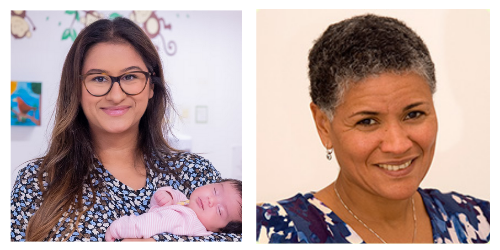
Amisha Adhia, Founder, Action for Accreta, and Miss Chineze Otigbah, Consultant Obstetrician
Since Action for Accreta1 launched in February 2026, it has heard from more than one hundred families living with the consequences of Placenta Accreta Spectrum (PAS). Their stories are different in detail. In shape, they are remarkably alike.
A woman attends her appointments. She may have had a previous caesarean section. She reports symptoms, asks questions, raises concerns. She is scanned, reviewed, and discharged. For women with a low-lying placenta, there is now an established pathway, a route toward specialist centres and the multidisciplinary teams equipped to care for them. But even within that pathway, the diagnosis is not guaranteed. Placenta Accreta Spectrum is notoriously difficult to detect on scan, and a reassuring image is not the same as a safe one. For women with atypical presentations, where the placenta is not low, where nothing obvious flags a concern, the risk is greater still. Falsely reassured, she arrives at the point of birth unprepared, and so does everyone else in the room. What follows is managed as an emergency. It need not have been.
This is the systemic failure that Action for Accreta was founded to address. Not one woman's story. A pattern.
Placenta Accreta Spectrum describes a group of conditions in which the placenta embeds abnormally into or through the uterine wall. Accreta is defined by the placenta attaching too deeply to the uterine lining. Increta extends further, invading into the muscle. Percreta is the most severe, breaches through the uterine wall entirely, and can reach other organs, often reaching the bladder or bowel. None of these presentations can be safely managed at birth without specialist care. Placenta Accreta Spectrum is on the rise and is potentially life threatening without specialist care.
The stated UK incidence is 1 in 300 to 1 in 2,000 pregnancies,2 a range so wide it tells its own story. In the United States, where recognition and coding methodology are more developed, the figure is approximately 1 in 272.3 Women's physiology is not meaningfully different between countries. What differs is how each system looks for the condition and what it counts when it finds it. The US figure is almost certainly closer to reality, suggesting the UK's true burden of PAS is substantially higher than our estimates acknowledge.
The trajectory makes this more urgent. Caesarean section rates in England now stand at approximately 45%,4 postpartum haemorrhage is at its highest recorded rate, a 19%5 rise since 2020 and IVF births have grown from 1.3% of UK births in 2000 to 3.1% in 2023.6 Each is a risk factor. Each is expanding. We are not managing a stable problem.
The condition is strongly associated with previous caesarean sections and placenta praevia, the presentations the system has been trained to identify. But evidence now suggests that as many as 30%7 of PAS cases present without praevia, with invasion occurring in locations outside the conventional field of concern. These women do not trigger referral pathways. Their scans come back unremarkable, not because the condition is absent, but because we may not be looking in the right place.
This is not a clinical mystery. It is a structural gap.
Amisha, co-author of this piece, and the reason Action for Accreta exists, had placenta increta: one of the most deeply invasive forms of PAS, later confirmed by histopathology. Before her care was finally coordinated, she had been seen by five hospitals. Four of them were designated specialist PAS units.
None of them found what was there. Her invasion site was not in the location the system was configured to examine. She was, in the most literal sense, invisible to a diagnostic frame that was not designed to see her.
It was consultant Miss Chineze Otigbah and her team at Barking, Havering and Redbridge University Hospitals NHS Trust who looked in the right place, and who, for the first time, established a care pathway and activated the multidisciplinary team that Amisha's pregnancy had always required. Miss Otigbah applied a tourniquet to restrict uterine blood flow creating the controlled conditions for precise surgical work. When the team encountered a hidden scar, invisible on pre-operative imaging, positioned higher than expected, at the exact site of placental invasion, they were prepared enough to manage it. A targeted resection followed. Amisha lost less than one litre of blood, retained her uterus, and preserved her fertility. By any clinical measure, a world-class outcome.
But here is the point: that outcome arrived at the sixth attempt. It required one team willing to look beyond where the system expected the problem to be. And Amisha is one of one hundred. Most of those women did not find their Miss Otigbah in time. Some never found her at all.
The most important thing a diagnosis does is open time. Time for a specialist team to form around a woman. Time for a plan in which she is a participant. Time for the question of how she wants to give birth to be asked and answered before crisis removes those options entirely.
A full multidisciplinary team for PAS should include a lead obstetrician with specialist PAS expertise, an interventional radiologist, a urologist or colorectal surgeon where percreta is possible, a specialist anaesthetist, a haematologist, and a neonatologist. RCOG guidelines recommend planned delivery before 36 weeks and 6 days, with neonatal preparation integral throughout.
But the role that often goes unremarked is the dedicated AIP (Abnormally Invasive Placenta) midwife, the previous term used for Placenta Accreta Spectrum. In Amisha's case, this was Louise Keane, present from the earliest appointments through to theatre, a consistent presence who held the human dimension of the experience as clinical complexity intensified. In a room where the surgical and technical can swallow everything else, she kept the family orientated toward what was also happening: the birth of a daughter.
Ishaani was born with breathing challenges and required neonatal care. The AIP midwife ensured the family was held through that transition, through recovery, discharge, and the weeks that followed. That continuity is not a supplementary kindness. It is what allows birth to remain a birth, even when it is also a medical procedure.
This is the standard one hundred families deserved, and did not receive.
When diagnosis happens early and planning follows, the conversation about how birth is managed surgically can widen. And with it, a question the field needs to ask more openly: does every woman with PAS require a hysterectomy? Or is that simply what happens when no one was prepared?
For most women with PAS, the placenta cannot be safely delivered without significant blood loss. A planned caesarean in a specialist centre, with a prepared team, a woman who understands what will happen and why, and a shared intention to protect both safety and dignity, can and should be experienced as a birth. The operative dimension does not displace the human one. But the question of what follows that incision deserves far more clinical and ethical attention than it currently receives.
The default in many settings remains caesarean hysterectomy: deliver the baby, then remove the uterus. When haemorrhage is uncontrollable, when percreta has involved adjacent organs, when the surgical picture is unstable, hysterectomy is the right and potentially lifesaving decision, and that should never be in doubt. But hysterectomy as reflex, as the outcome determined before the woman arrives in the room, is a different matter. For certain presentations, particularly accreta and increta, preservation of the uterus is not a concession to patient preference. It is, with appropriate planning and expertise, an achievable clinical goal.
This matters beyond the surgical. A woman who retains her uterus may choose to have further children. She avoids surgical menopause. She leaves the theatre with her body more intact than she entered. For many women, these are not peripheral concerns, they are central to how they understand their identity and what this birth was.
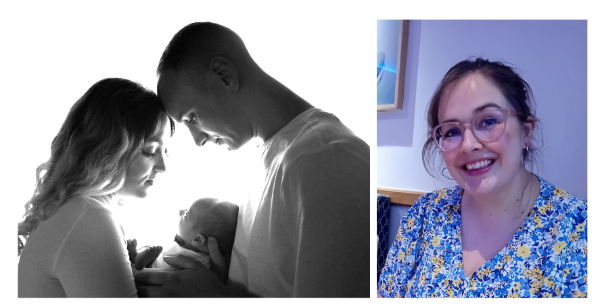
Demi Leigh-Shields and Erin Cooper
The voices of women within the Action for Accreta cohort make this real. Demi Leigh-Shields, interviewed by ITV News,8 described her diagnosis as feeling like a “death sentence”, and had to advocate fiercely before finding a team that listened and agreed to preserve her uterus rather than proceed to hysterectomy as the default. Erin Cooper, whose undiagnosed placenta accreta resulted in 13 blood transfusions, ICU admission and an emergency hysterectomy, told The Guardian9: "I felt a loss of my womanhood. I'm now going into early menopause and not a day goes by that I don't think about being infertile at 33."
Amisha's case illustrates what preparation can change. The use of a tourniquet to restrict uterine blood flow after the delivery of the baby created a controlled field for precise surgical decisions, and allowed a targeted resection of the invaded area rather than removal of the uterus. Even when a hidden scar changed the picture mid-procedure, the prepared team could respond rather than react. Less than one litre of blood lost. Uterus conserved. Fertility preserved, in a woman with confirmed invasive increta, where hysterectomy would in many centres have been the automatic course.
Safety must remain the non-negotiable foundation. No conservative approach should be pursued at the cost of a woman's life. But the evidence increasingly shows that with the right preparation, the choice is not simply between hysterectomy and catastrophe. There is a path between them, one that requires planning, expertise, and a willingness to ask whether the default is truly the only option. That conversation cannot happen in an emergency. It can only happen when she is found in time.
Across one hundred families, a finding keeps repeating that is harder to quantify than blood loss or hysterectomy rates, but no less important: women did not feel heard.
Concerns were not followed up. One woman who later haemorrhaged at 33 weeks had asked for additional scans and been labelled an over-anxious mother. Decisions were made around women rather than with them. Births focused on survival, necessarily, but left no room for anything else: no pause for the baby arriving, no space for the woman, no conversation about what other options might have existed.
Birth, in all its forms, is a profound physiological event. The values at the heart of woman-centred care, feeling safe, seen, informed, and respected, do not stop applying because the birth is surgical. The woman with PAS, sitting with her diagnosis in the weeks before a planned caesarean, asking whether she might carry another child, deserves the same honesty and presence that any woman in birth deserves.
Through 22 parliamentary questions answered since January 2026, the government has confirmed nine critical gaps in the national response to PAS on the record. There is no central NHS data on PAS cases. No record of who has been trained in PAS diagnostics. No mandate for frontline training. No plans to add PAS to maternity safety dashboards. No mandatory reporting, and no routine MBRRACE-UK surveillance, meaning PAS-related deaths may be recorded simply as haemorrhage, obscuring the true scale of harm. No national body holds formal responsibility for the condition at all.
These are not bureaucratic abstractions. They are the reason 61% of women in this report went undiagnosed.
Action for Accreta is calling for three things: updated RCOG guidelines reflecting modern evidence, the campaign has already secured confirmation that GTG27a will be revised in summer 2026 to cover atypical presentations and non-previa PAS for the first time; national recording of PAS, including a dedicated MBRRACE-UK category; and a national training programme ensuring every maternity unit is prepared. The campaign has cross-party support from over thirty parliamentarians, including former Health Secretary Sir Jeremy Hunt MP, Lord Hunt of Kings Heath (OBE), Helen Morgan MP (Liberal Democrat Health Leader) and Dr Caroline Johnson (Shadow Health Minister, Conservatives) with an All-Party Parliamentary Group meeting planned for this summer.
Across one hundred families, women have asked for the same things: to be found before the emergency. To be given a plan they helped shape. And to feel, even inside an operating theatre, that what is happening is a birth.
That is not too much to ask. It is, in fact, the minimum.
Action for Accreta documents the experiences of families affected by Placenta Accreta Spectrum across the UK. To share your story or support the campaign, visit [actionforaccreta.org]
Clinical decisions regarding PAS management should always be made in consultation with specialist clinicians.
Amisha Adhia is the Founder of Action for Accreta, a national patient safety campaign established in February 2026 following her experience of Placenta Accreta Spectrum. The campaign has documented over one hundred affected families, secured cross-party parliamentary engagement, and achieved the first dedicated parliamentary questions on PAS in the history of Hansard.
Miss Chineze Otigbah is a Consultant Obstetrician with expertise in Abnormal Invasive Placentation. She leads a dedicated multidisciplinary PAS service and is a clinical advocate for specialist-led, woman-centred care in the management of complex placental conditions.
2 RCOG (2018) Placenta Praevia and Placenta Accreta: Diagnosis and Management (Green-top Guideline No. 27a)
3 ACOG (2018) Placenta Accreta Spectrum
4 NHS Maternity Statistics, 2024-25
5 Nursing in Practice (2025) Rate of severe postpartum bleeds set to reach five-year high
6 HFEA (2025) Fertility treatment 2023: trends and figures: Preliminary UK statistics for IVF and DI treatment, storage, and donation
7 Carusi DA, Fox KA, Lyell DJ, Perlman NC, Aalipour S, Einerson BD, Belfort MA, Silver RM, Shamshirsaz AA. Placenta Accreta Spectrum Without Placenta Previa. Obstet Gynecol. 2020 Sep;136(3):458-465. https://pubmed.ncbi.nlm.nih.gov/32769646/
8 ITVX (2026) London mums come together to share their experiences of Placenta Accreta Spectrum
9 The Guardian (2026) Rare pregnancy complication has put UK women into ‘emergency surgery’
Please feel free to download and share a pdf of this article. If you wish to use AIMS copyright material please see aims.org.uk/general/aims-copyright
If you found this article helpful please consider becoming an AIMS member or making a donation to support our work. We are a small charity that accepts no commercial sponsorship, in order to preserve our reputation for providing impartial, evidence-based information.
AIMS supports all maternity service users to navigate the system as it exists, and campaigns for a system which truly meets the needs of all.