
AIMS Journal, 2026, Vol 38, No 2
The theme of this issue of the AIMS journal is ‘sovereignty of the body’. Sovereignty of the body (or bodily autonomy) is the principle that every individual has absolute, supreme authority over their own physical person, including control over what happens to their body, health, and appearance. It emphasises self-ownership - the right to refuse physical contact, medical procedures, or external control.1 In this article, Gemma Mckenzie explores whether women are ever free to fully exercise their autonomy.
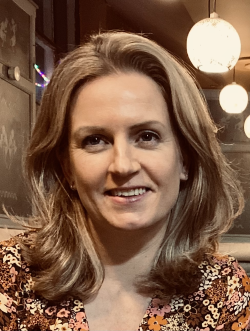
By Gemma McKenzie
Men is a 2022 film directed by Alex Garland, which explores patriarchy and toxic masculinity from the perspective of women. The main character Harper, played by Jessie Buckley, retreats to a 16th century manor to heal after the tragic end of a domestically violent relationship. The film contains layers of symbolism – such as Eve eating forbidden apples - but it also captures unsettling moments that many women will have experienced. In one scene, to which I have repeatedly returned, we see Harper take a stroll alone through the countryside and onto a disused railway track. We watch her happily experience the greenery, the spring woodlands, rain drops and thunder. She demonstrates the freedom to explore and wander through the outdoors, to live in the moment and appreciate the natural world and her place in it. Yet, as she enters a long stone tunnel, her solitude shifts from joy to fear when a lone man begins to follow her.
Every time I watch this scene, I contemplate whether women - even in the UK - are truly free at all. Even in my own life, the town in which I live is known for its beaches and sand dunes and its interconnected countryside pathways. But I would never walk them on my own. While my husband takes solo strolls to these places, if I take a morning walk alone, I stick to the roads and the busy streets. He breathes in the fresh air while I breathe in the school run car fumes.
To be free, to tap into the joys and gifts of nature, to move unencumbered through the world and enjoy your own bodily autonomy are liberties that many of us in the UK may presume are openly accessible to all. But are they? Women’s bodies are surveilled, restricted and socially policed, from what we wear, to where we go, to who we sleep with and how often. Perhaps our bodies are subjected to scrutiny most heavily when we are pregnant.
On paper, pregnant women have the right to decide how and where they birth; they have the right to decline interventions and pursue as close to an undisturbed physiological birth as possible. The reality is, however, that in our maternity system, it is becoming increasingly difficult for women and birthing people to experience an undisturbed physiological birth. In many ways even attempting a vaginal birth without interventions is like running the gauntlet – and that’s before labour starts. The need to convince, argue, justify and reason with maternity staff about why we may want a homebirth, or a VBAC (vaginal birth after caesarean) or why we may not want an induction, vaginal examination or a sweep can be exhausting. The simplicity of stating, ‘this is my body, this is what I agree to you doing to it, and this is where and how I intend to birth,’ is drowned out by unsupportive hospital policies, an over-medicalised system, staff fear of litigation, and an industry that does not support its caregivers to provide genuine women - or birthing people - centred care.
Freebirth, by its very name, should encompass freedom and is often considered a way in which women avoid the restrictions placed on them within NHS maternity services. This is what I presumed when I embarked on my PhD exploring the phenomenon. Deciding to give birth without healthcare professionals present enables a woman to choose her own birth space, who is in it, how it is organised and to create an environment that allows her to move and birth however she feels. But like Harper, as she strolls leisurely down the disused railway line, the freedom to do this is an illusion. Freebirth is frowned upon by society and by the maternity system. Patriarchy questions women’s ability to make our own decisions, especially in relation to our natural urges, reproductive systems, genitalia, and the unborn babies that grow inside of us. To think of our own needs, or our desires to experience the highs of an undisturbed physiological birth - and to act on those needs and desires - is often presumed to be selfish, dangerous and bad mothering.
To sidestep social condemnation, freebirthing women will often hide the truth.2 Claiming that the baby was born too quickly to call for a midwife is an obvious example. But frequently, this will be the culmination of several other ‘fibs’ as women pretend to organise hospital or homebirths while they mentally plan for a freebirth. The need to lie is emblematic of how women are ‘unfree’ when it comes to making decisions about our own birthing bodies.
When women inform maternity staff of their freebirth plans, the response from midwives becomes important. Sometimes, women are referred to more senior staff for a discussion. The outcome of these conversations impacts how maternity services and other professionals will then react to a woman’s plans: tacit support, withdrawal of care, social services referral, police investigation. When the outcome is negative, women’s bodies are being restricted and policed. But even when there is support, in effect maternity staff are rubber stamping a woman’s legal right to exercise her own bodily autonomy. In other words, they are saying ‘I give you permission to not be touched, to not undergo a medical intervention and to make your own birthing decisions.’ Again, even in this situation, women remain ‘unfree.’
In a patriarchal society, where gender-based violence is considered a public health concern, it is no surprise that our maternity system is one based on the control and management of women’s bodies. A system that treasures its largely female workforce and centres the needs and requirements – physical, emotional, mental and practical – of its overwhelmingly female service users is unlikely to manifest in a society with gaping gender inequality and where women fear to walk the streets alone. The ability to tap into the natural world, to use our birthing bodies in the way we deem most appropriate and to at least try to experience an undisturbed physiological birth is being stolen from us. Like Harper’s stroll through the woods, we can only experience the freedom of bodily autonomy until patriarchal forces decide otherwise. True freedom is an illusion – even when exercising our right to freebirth.
Author Bio: Gemma has a PhD from King's College London which explores women's experiences of freebirthing in the UK. She is the founder of Threads of Protest, a touring crochet and knitting exhibition promoting human rights in childbirth. Gemma is currently writing a book called 'Unravelled' about the intersection of women, human rights and textiles, and which will be published by Icon in Autumn 2027. Her website is: www.gemmamckenzie.co.uk
Editor’s note: For further reading on some of the issues here, AIMS recommends reading:
Morgenroth, T., Ryan, M.K., Arnold, M.F. and Faber, N.S. (2025), The Moralization of Women's Bodies. Eur J Soc Psychol., 55: 227-239. https://onlinelibrary.wiley.com/doi/10.1002/ejsp.3136
Alejandra Cardenas (no date) Freedom and Autonomy during Pregnancy and Childbirth. Human Rights Centre Blog. University of Essex. https://hrcessex.wordpress.com/2022/03/28/freedom-and-autonomy-during-pregnancy-and-child-birth/
1 Smolenski J. The foundations of informed consent and bodily self-sovereignty: a positive suggestion. Monash Bioeth Rev. 2024 Jun;42(1):115-136. doi: 10.1007/s40592-024-00203-4. Epub 2024 Aug 22. PMID: 39172323.
2 McKenzie G. (2022) Freebirthing in the UK: A Narrative Study. https://static1.squarespace.com/static/60d014870bf15d757a06b0c1/t/6523c7c86306173af1e7c312/1696843739691/GMc+PhD+FINAL+20.06.22.pdf
Please feel free to download and share a pdf of this article. If you wish to use AIMS copyright material please see aims.org.uk/general/aims-copyright
If you found this article helpful please consider becoming an AIMS member or making a donation to support our work. We are a small charity that accepts no commercial sponsorship, in order to preserve our reputation for providing impartial, evidence-based information.
AIMS supports all maternity service users to navigate the system as it exists, and campaigns for a system which truly meets the needs of all.