
AIMS Journal, 2026, Vol 38, No 2
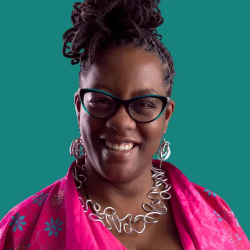
By Mars Lord
Sovereignty means ownership. It means the right to decide what happens to your body, on your terms, without justification, without negotiation, without fear of consequence. For most people this is framed as something already possessed that simply needs protecting. For Black and Brown birthing people in the UK, sovereignty has rarely been ours to lose. The question is whether it was ever handed to us at all.
The maternity system in the UK sits inside a society shaped by racism. It is not separate from that society, nor is it an exception to it. The NHS was built on the labour of Black and Brown people brought here by invitation and treated with contempt. The knowledge systems it draws on have roots in colonial medicine — experimentation on Black bodies, the dismissal of indigenous knowledge, hierarchies of care that mapped neatly onto hierarchies of race. You do not clean that history from an institution through good intentions or diversity targets. The institution carries it.
So when a Black or Brown birthing person enters a maternity ward, they do not enter neutral territory. They enter a space with institutional memory. A space that has historically regarded Black and Brown bodies as higher risk, more difficult, less reliable narrators of their own experience. The data tells us what that costs. Black women in the UK are still significantly more likely to die in pregnancy or childbirth than white women. Asian women are almost twice as likely. These are not anomalies. They are outcomes.
Sovereignty, in this context, is not just a philosophical question. It is a survival one.
As a doula, I have been in those rooms. I have watched questions get shut down mid-sentence. I have sat with families who were threatened with Social Services referrals for exercising informed refusal. I have seen Black and Brown birthing people labelled aggressive, accused of bullying, for doing nothing more than declining a recommendation or asking what the evidence was. And I have heard, more than once, a doctor instruct a midwife to go back into the room and tell the birthing person that this is what we will do. Not what we recommend. Not what we advise. What we will do.
That sentence tells you everything about whose sovereignty is considered real.
To claim your body in a system like this is to make yourself legible as a problem. The system does not respond neutrally to a Black woman asserting herself. It responds from within its own history. And its history is not ours.
Bodily sovereignty should mean that your decisions about your body are final. That informed refusal is as valid as informed consent. That your knowledge of your own body is treated as evidence, not attitude. For Black and Brown birthing people, that is still contested ground. Not because we do not understand our rights, but because understanding them and accessing them are not the same thing.
The gap between those two things is where we keep dying.
Author Bio: Mars Lord is a doula, educator and the founder of Abuela Doulas. Awakening Seeds: Anti-racism for birthworkers is a course for practitioners who want to understand their role in the system described here and work to change it.
The AIMS Journal spearheads discussions about change and development in the maternity services.
AIMS Journal articles on the website go back to 1960, offering an important historical record of maternity issues over the past 60 years. Please check the date of the article because the situation that it discusses may have changed since it was published. We are also very aware that the language used in many articles may not be the language that AIMS would use today.
To contact the editors, please email: journal@aims.org.uk
We make the AIMS Journal freely available so that as many people as possible can benefit from the articles. If you found this article interesting please consider supporting us by becoming an AIMS member or making a donation. We are a small charity that accepts no commercial sponsorship, in order to preserve our reputation for providing impartial, evidence-based information.
AIMS supports all maternity service users to navigate the system as it exists, and campaigns for a system which truly meets the needs of all.