
AIMS Journal, 2026, Vol 38, No 2
This talk is included with the kind permission of the speaker. We have linked it to the keynote talk given by AIMS volunteer Jo Dagustun at the same event.
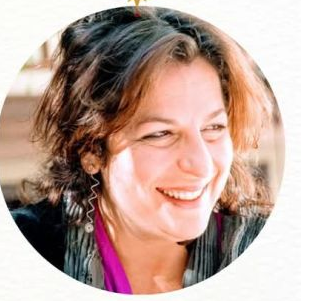
Transcribed and translated from a talk by Ioanna Vasilaki
My name is Ioanna Vasilaki — I am a midwife, president of the Union of Independent Midwives in Greece, and an IBCLC certified breastfeeding consultant. Today, we will talk about something that concerns us all — as mothers, as daughters, and as people who care about life: natural birth — not only as a biological process but as a right, a source of power, and a part of our cultural memory.
There is nothing more radically human, more primal, and more powerful than birth. And yet — despite the sanctity of the moment — birth today is often taken out of women’s hands. It is medicalised, controlled, directed. Birth is no longer an experience; it has become a protocol.
In many countries, birth has drifted far from its natural essence. Women give birth in brightly lit rooms, surrounded by interventions, clocks, and voices. Their bodies are often met not with trust but with suspicion. But this is not progress — it is loss.
And in this talk, I will explain why..
The Decline of Natural Birth
In our time, women are often deprived of the experience of natural labor. In many countries — Greece among them — the rates of cesarean sections are extremely high, often without medical necessity. According to the World Health Organization (2015), the ideal rate for cesarean births is between 10–15% (see editor's note). In Greece, it reaches 60–70%. That means thousands of women are not choosing — someone else chooses for them. And as we all know, the absence of choice is a form of violence.
The Scientific Benefits of Natural Birth
Natural birth is not a romantic notion — it is scientifically proven to be the safest and most beneficial form of childbirth for both mother and baby when there are no medical complications.
For the mother, it is associated with faster recovery and earlier return to daily activities (as stated by the American College of Obstetricians and Gynecologists, 2020). It carries fewer risks of infections, hemorrhaging, and post-operative pain. Immediate skin-to-skin contact fosters emotional bonding, supporting the mother’s mental well-being and the foundation of her relationship with her child.
Natural birth, when allowed to unfold without unnecessary interference, is not just a physical process but a neurobiological event that activates deep, instinctive maternal reflexes — what we call the primal maternal instincts.
When left undisturbed, a woman enters a modified state of consciousness — a deeply instinctive state — where her body and brain work in harmony. The hypothalamus, amygdala, and brainstem awaken, guiding her through a biological process of profound focus and connection with her body’s innate intelligence.
And when the baby is born… the mother knows what to do.
She doesn’t need instructions. She simply knows — how to hold, to gaze, to feed, to protect — because it is written within her, carved by millennia of evolution.
The Child’s Role
In natural birth, it is the baby’s body that initiates the process. The maturity of the lungs sends the first signal to the uterus: 'I’m ready — start.'
When birth happens before that readiness — as in scheduled cesareans — we deprive the baby of the biological timing it needs, which explains higher rates of respiratory distress.
The passage through natural birth also provides a 'positive stress' — a necessary hormonal surge of noradrenaline that activates the infant’s sense of smell, helping it locate the mother’s breast by scent. This is its first instinct of survival and connection.
Then comes the microbiome — the newborn’s first microbial encounter is with that of the mother’s vaginal flora. It is the foundation on which the immune system is trained. Babies born naturally have stronger microbial diversity and immune development.
Even birth under bright artificial light interferes with melatonin — an antioxidant hormone — reducing its protective benefits for both mother and baby.
Thus, natural birth is not just a way to be born — it is the beginning of life’s balance: mature lungs, instinctual connection, immune education, biochemical wisdom.
The Hormone of Love — Oxytocin
Dr. Michel Odent, pioneering French obstetrician, said:
'Oxytocin is the hormone of love. It is released during natural birth, breastfeeding, and orgasm. Without love and safety, there is no birth.'
Oxytocin is far more than the hormone that triggers contractions. It is a biochemical language of love, trust, and bonding.
It orchestrates uterine rhythm, facilitates milk ejection, and deepens emotional attachment.
But excessive intervention — anxiety, noise, bright light, constant observation — inhibits natural oxytocin. When birth becomes a managed event instead of a lived experience, the woman’s sense of safety and empowerment diminishes.
Birth belongs to the mammalian part of the woman. Just like a cat needs calm and darkness to give birth, a woman needs trust, quiet, and privacy. Because all mammals give birth only when they feel safe.
The 'Golden Hour'
Let us pause on a sacred moment — the first hour after birth, often called the golden hour.
This is not sentimental — it is a biological necessity.
When the newborn rests skin-to-skin on the mother’s body, smelling her skin and heartbeat, beginning to nurse — vital systems activate: immunity, emotional regulation, attachment formation.
This 'first imprint’ forms the foundation of future trust and relational capacity. If it is interrupted without medical reason, something precious is lost — not the whole world, but the first memory of love.
Epigenetics and the Memory of Birth
Epigenetics, a revolutionary field, studies how the environment shapes gene expression. We are not only what we inherit — we are also what we experience. The moments of birth are among the most critical influences on lifelong physiology and psychology.
Michel Odent gives a striking example:
English bulldogs, after just four generations of cesarean births, have lost the ability to give birth naturally. It is not just anatomy — it is epigenetics in action. The body adapts to what it 'learns' as normal.
If our culture trains women to believe that birth is dangerous — that only technology can 'save' them — then, over time, humanity forgets how to give birth naturally. Not because we can’t, but because we’ve learned not to trust our own bodies.
Technology has blurred this boundary. Yes — cesarean sections save lives. Medicine is a miracle. But we must ask: Does technology serve the body, or does it replace it?
Progress that disconnects women from their bodies is not liberation — it is a new form of control.
Returning to Balance
We must reclaim balance — through knowledge, trust in the body, and choices founded on respect. Every natural birth we 'allow' is not just a personal triumph — it’s an investment in the collective memory and strength of humanity.
Because the way we are born shapes the way we exist.
Natural birth is not nostalgia.
It is not regression.
It is the return to our embodied wisdom, to the bond between mother and child, to the genetic health of future generations.
If we lose it, we lose not just an experience, but the very memory of how humans are meant to come into the world.
When we speak of natural birth, we must be careful:
No woman is less because she didn’t have one.
Women act wisely — they choose what feels safest in a system that often breeds fear, not trust.
The question is not 'Why didn’t you give birth naturally?' but rather, 'What kind of world have we built, where that feels impossible?'
Final Questions
1. Does moving away from natural birth truly benefit our health as a species?
2. Does it serve us socially to remove women from control over their own bodies?
3. Who actually benefits from a birth that happens outside the body?
Surely, not the women.
They lose control. They lose the power that comes from the birth experience itself.
So the deeper question is this:
Is it progress to strip women of authority over birth — or simply the same old power, in new technological clothing?
Let us remember who we are.
Birth is an act of power — where pain meets creation, and flesh becomes love.
Let us trust the body again.
Let us see birth not as a medical procedure but as a fundamental human right.
Because when a woman gives birth freely — a child is born feeling that the world is safe.
And perhaps, through that memory…
humanity might begin to heal.
Thank you
Author Bio: Ioanna Vasilaki is a midwife, president of the Union of Independent Midwives in Greece, and an IBCLC certified breastfeeding consultant.
Editor's note: Deciding an ideal or optimum rate of caesarean section is a complex issue. In recent years the World Health Organization no longer recommends a specific rate for countries to achieve at population level. WHO Statement on Caesarean Section Rates. Picking up on one or two other points that Ioanna makes, you may like to read this article from a previous AIMS journal.
The AIMS Journal spearheads discussions about change and development in the maternity services.
AIMS Journal articles on the website go back to 1960, offering an important historical record of maternity issues over the past 60 years. Please check the date of the article because the situation that it discusses may have changed since it was published. We are also very aware that the language used in many articles may not be the language that AIMS would use today.
To contact the editors, please email: journal@aims.org.uk
We make the AIMS Journal freely available so that as many people as possible can benefit from the articles. If you found this article interesting please consider supporting us by becoming an AIMS member or making a donation. We are a small charity that accepts no commercial sponsorship, in order to preserve our reputation for providing impartial, evidence-based information.
AIMS supports all maternity service users to navigate the system as it exists, and campaigns for a system which truly meets the needs of all.